
Almond Croissant Cake Made with Fresh Milled Flour
This post may contain affiliate links. Please read our Disclosure Policy.
You know that moment when you walk past a bakery and the smell of butter and almonds physically stops you in your tracks? This almond cake is that moment, baked into layers you can slice. It borrows every good thing about an almond croissant — the buttery shatter, the sugared top that crackles under your fork — and rebuilds it as something you can make on a random Tuesday without a laminating marathon. Fresh milled flour changes everything here. You get deeper, almost nutty undertones that play off the almond extract in a way that all-purpose just cannot touch. This is the cake you make for a special occasion when you want to show off your grain mill without lecturing anyone about whole grains. It tastes indulgent, looks impressive, and happens to be made with flour you milled yourself. That is the best kind of recipe — the one that sneaks nutrition into pleasure without compromise.
Overview of Ingredients
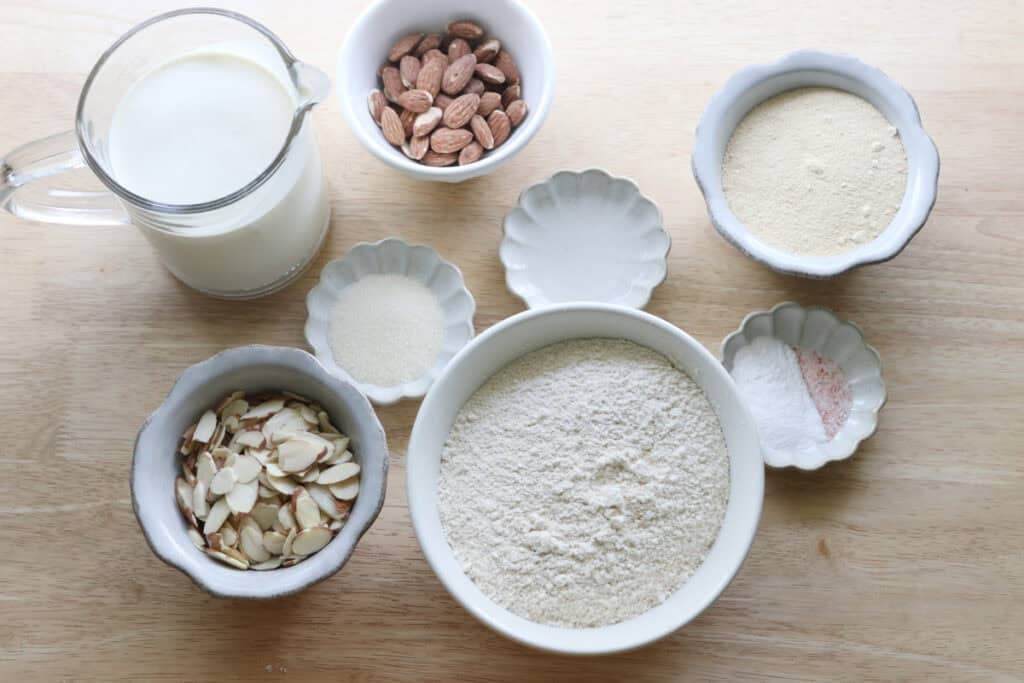
Fresh milled flour — This is your structure. Milling it fresh means the oils have not oxidized and the flavor is brighter, almost sweet on its own.
Raw almonds — It adds texture, fat, and that deep almond backbone you cannot get from extract alone.
Heavy cream — Unsalted, room temperature. This is your fat and flavor base. Do not skimp or swap for anything. The whipped cream is what gives this cake its airiness and helps create that tender crumb.
Sugar — Sweetens, tenderizes, and helps with browning. Granulated or maple sugar works best here because it creams well with butter. You need that air incorporation for lift.
Eggs — Structure and richness. They bind everything, add moisture, and help the cake rise. Room temperature eggs mix more evenly and do not deflate your creamed butter.
Almond extract — Adds even more almond flavor and adds warmth. Pure extract matters here. Imitation tastes like chemicals next to fresh milled flour.
Salt — Balances sweetness and makes every other flavor sharper. Skip it and the cake tastes flat.
Sliced almonds — These get tossed on top of the batter along with a bit of sugar to create that crunchy, caramelized top layer. Raw almonds work better than roasted because they toast as the cake bakes.
What Makes This Recipe Great
Fresh milled flour gives you flavor depth that store-bought flour cannot touch.
When you mill wheat berries right before baking, you keep all the natural oils, bran, and germ that commercial milling strips away. Those components carry flavor — nutty, slightly sweet, with a mineral backbone that plays beautifully against the richness of the almond flavor. This is the best cake because every bite has layers of taste instead of just one flat sugar note.
The almonds do the heavy lifting.
It is not just flavoring. It is fat, moisture, and structure all in one ingredient. That is why this cake stays tender without going gummy, and why the almond flavor tastes real instead of like artificial extract. You are working with ground almonds and sugar, not chemicals, and your taste buds know the difference immediately.
The topping is where the magic happens.
Sliced almonds and sugar create that crackling, caramelized crust you get on an actual almond croissant. As it bakes, the sugar melts and toasts, the almonds turn golden, and you end up with the best texture contrast that makes every forkful interesting. Soft crumb, crunchy top, almond flavor from two directions.
It is way easier than making actual croissants.
No laminating dough. No overnight rests. No rolling butter into paper-thin layers and praying it does not tear. You get all the flavor payoff without the pastry school commitment. Mix, pour, top, bake. Done in under two hours, start to finish.
The ratios are dialed in for fresh milled flour.
Whole grain flour behaves differently than white flour. It absorbs more liquid, it can go dense if you are not careful, and it has a stronger flavor that can overpower delicate recipes. This cake accounts for all of that. The whipped cream adds moisture and air, the baking powder gives enough lift, and the sugar balances the earthiness of the wheat. You do not have to guess or adjust. It just works.
For more fresh milled desserts, try these delicious, glazed lemon cookies or these Wild Berry Pop-Tarts!
How to Know It’s Done
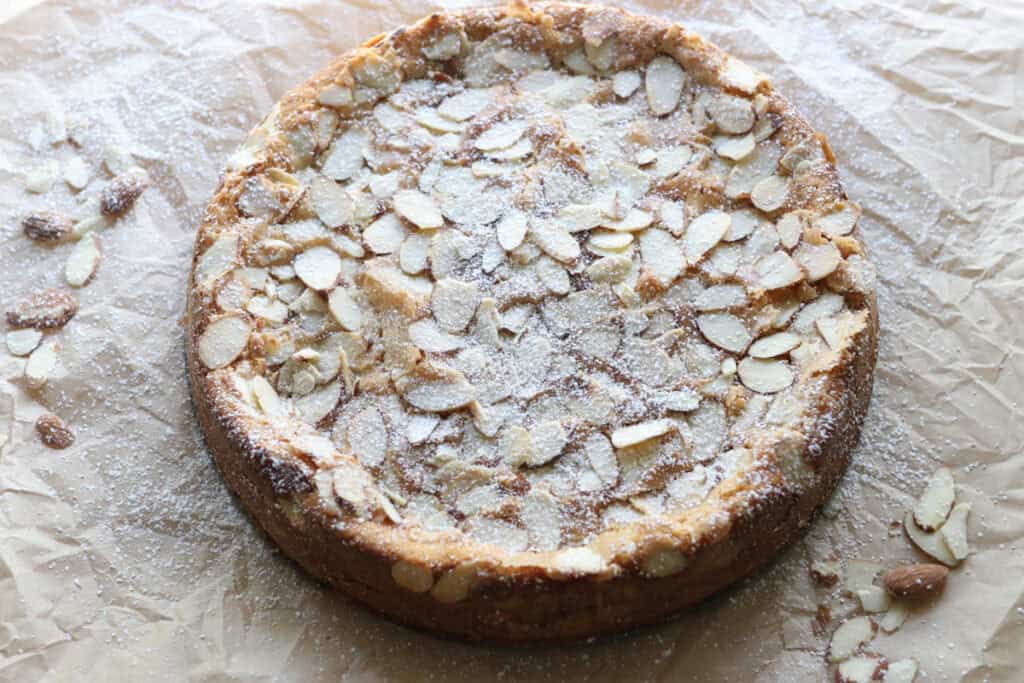
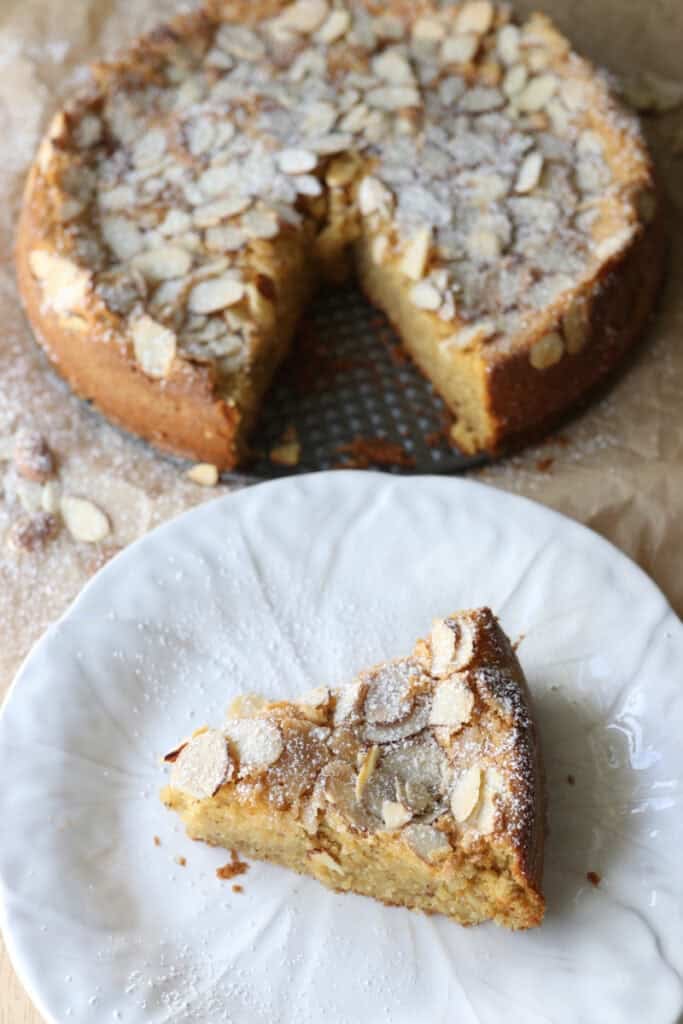
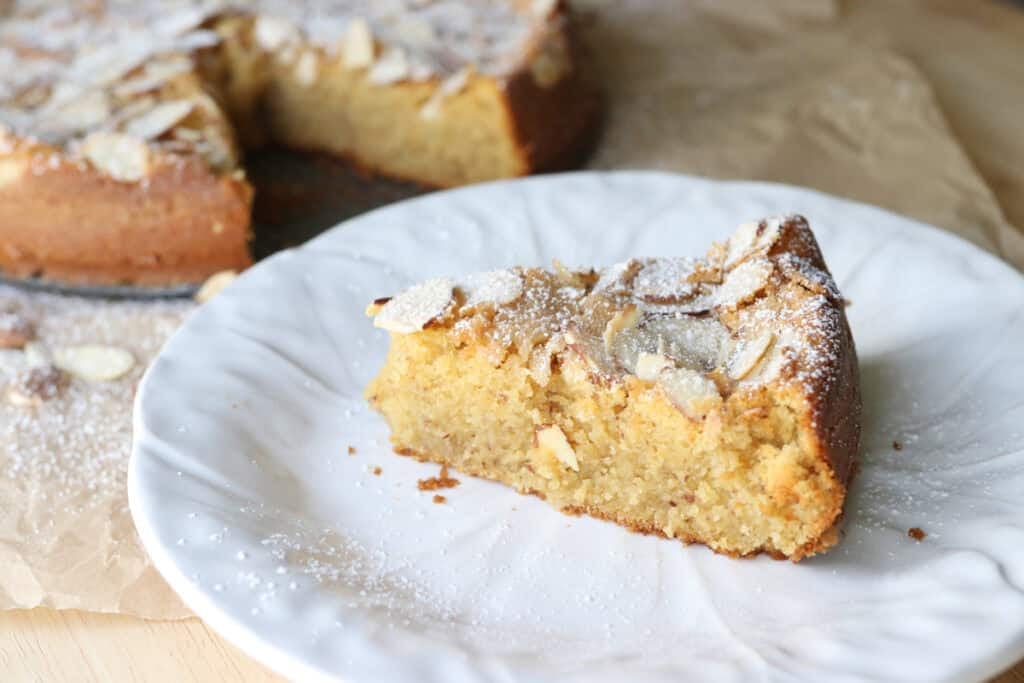
The top should be deeply golden with darker edges. If it is still pale blonde, it needs more time. The almond topping should look toasted, almost amber in spots, with a few bits of caramelized sugar starting to darken around the sliced almonds. That is where the flavor lives.
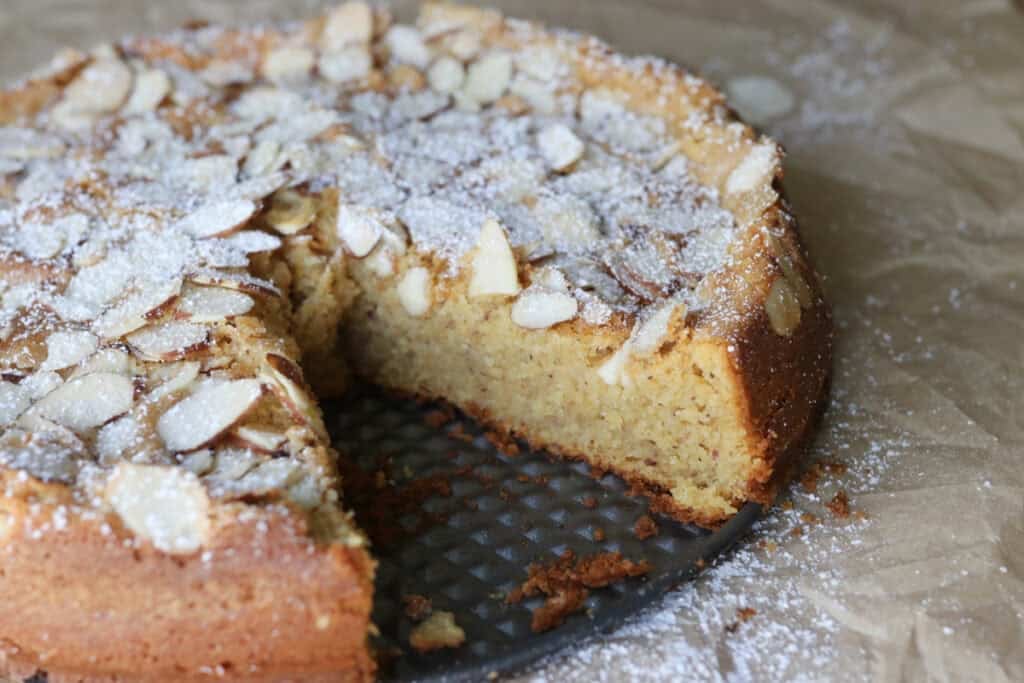
A toothpick or cake tester inserted in the center should come out with just a few moist crumbs. Not wet batter, but not bone dry either. Fresh milled flour holds moisture differently, so a completely clean toothpick might mean you have overbaked it. You want those clingy crumbs that tell you the cake is set but still tender.
The edges should pull away slightly from the pan. Not a full gap, just a hint of separation. That means the structure has set and the cake is not going to collapse when you pull it out.
Press the center lightly with your finger. It should spring back slowly. If it leaves a deep indent, give it another five minutes. If it feels firm and bounces right back, you are there.
Tips for Success
- Weigh your fresh milled flour. Volume measurements are a mess with fresh flour because it settles differently every time. Use grams.
- Let your flour rest for 10 minutes after milling. Fresh milled flour is warm and the starches need a second to hydrate evenly. This prevents weird pockets of dryness in your cake batter.
- Cream the butter and sugar longer than you think. Go for at least 5 minutes on medium speed. The mixture should be light, fluffy, and almost white. This is where your lift comes from, and cutting it short gives you a dense cake.
- Do not overmix once you add the flour. Stir just until you stop seeing dry streaks. Overmixing develops gluten and turns tender crumb into tough crumb, especially with fresh whole grain flour.
- Toss your sliced almonds and sugar on top of the batter. Topping the cake with the almonds and sugar before baking ensures you get the perfect crumbly top with toasted almonds.
Helpful Tools & Supplies
Whether you’re just dipping your toes into the world of fresh milled flour or you’re a seasoned home baker, I’ve taken the guesswork out of what you truly need. All of these tools and resources are available in my shop, designed to help your journey be smooth and nourishing:
Grain Mills
- NutriMill Classic Grain Mill – My go-to for fine, consistent milling; perfect for sandwich breads and everyday baking.
- NutriMill Harvest Grain Mill – Stone-ground elegance: this model delivers whole-grain flavor with a beautiful appearance.
Mixers
- Ankarsrum Mixer – A powerhouse kitchen companion with multiple speeds and attachments—ideal for kneading bread dough effortlessly.
Baking & Bread Tools
- Bread Bow Knife – Artisan-made with a high-carbon steel blade and cherry wood handle—this knife slices loaves with ease.
- Sourdough Essentials Kit With Starter – Complete starter kit that includes dehydrated sourdough starter, banneton baskets, a dough whisk, scoring lame, and more.
Cookbooks & eBook Bundles
- Everyday Whole Grains Vol. 1 & 2 (printed & digital) – Packed with 70+ recipes built around fresh milled flour, from breads to snacks and desserts.
- The Fresh Breads Bundle – A comprehensive set including eBooks like The Perfect Loaf, the Cookie Jar, bulk baking guides, and a sourdough mini‑course—all centered on fresh milled flour.
- Freshly Milled Made Simple Guide – A video-based guide that walks you through milling and baking basics, making the process feel easy and approachable.
Specialty Items
- Dehydrated Sourdough Starter – Just add water and flour to rehydrate this starter—perfect for bakers without an active sourdough culture.
- I Knead Fresh Flour Mug – A charming, handmade 12 oz ceramic mug—great for coffee breaks during dough rising!
Why These Are Worth It
Every tool in this collection has been personally vetted to support you in baking with fresh milled flour. From the grain mills that make your flour, to mixers that knead dough, to resources that teach you every step—it’s all here to make sure your homemade bread journey is joyful, nourishing, and successful.
➡️ Explore all of these items and more in the Generation Acres Farm Shop — your one-stop spot for fresh milled flour baking essentials.
Equipment
- 9-inch round cake pan or springform — Springform makes it easier to remove cleanly, but a regular pan works if you line it well with parchment paper. The straight sides matter for even baking and a clean slice.
- Food processor or blender
- Stand mixer or hand mixer
- Rubber spatula
How to Make Freshly Milled Almond Croissant Cake
Ingredients
Cake Batter:
- ⅓ cups whole, raw almonds (52 grams)
- 1 ¾ cups heavy cream (414 grams)
- 1 ¾ cups freshly milled soft white wheat flour, finely milled (201 grams)
- 2 teaspoons baking powder
- ½ teaspoon salt
- 3 eggs
- ¾ cup sugar (150 grams)
- 2 teaspoons almond extract
Topping:
- ⅓ cup slivered almonds (35 grams)
- 1 tablespoon sugar
- Powdered sugar, optional
Directions:
- Preheat the oven to 350 degrees F. and butter and flour a 9 inch springform pan.
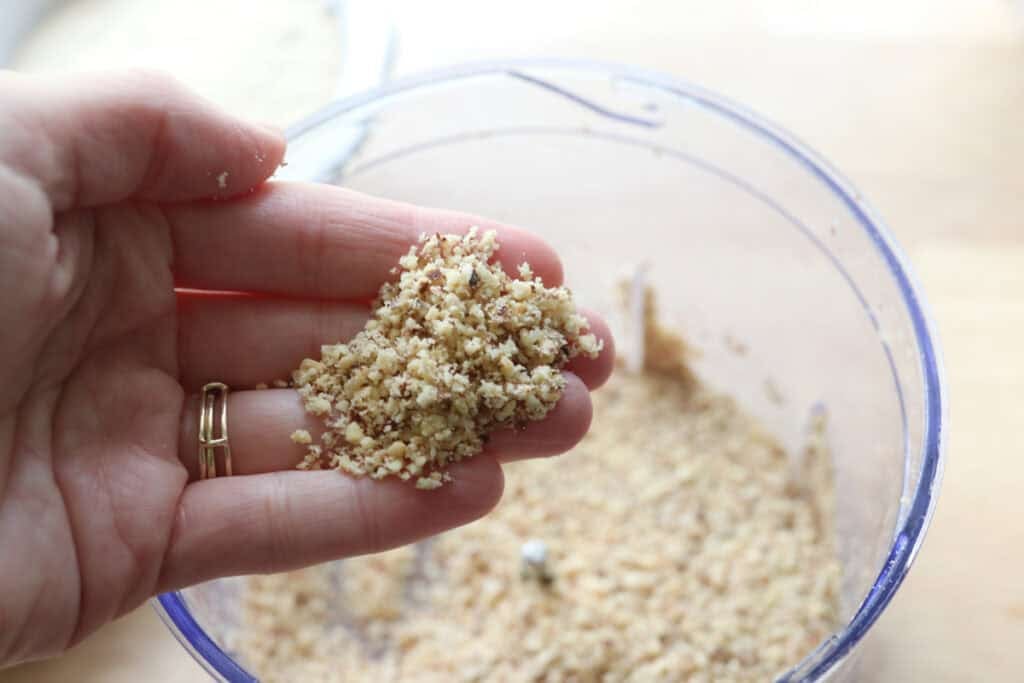
- In a food processor or blender, chop the whole almonds until mostly ground. You want them ground pretty well, but not as fine as almond meal.
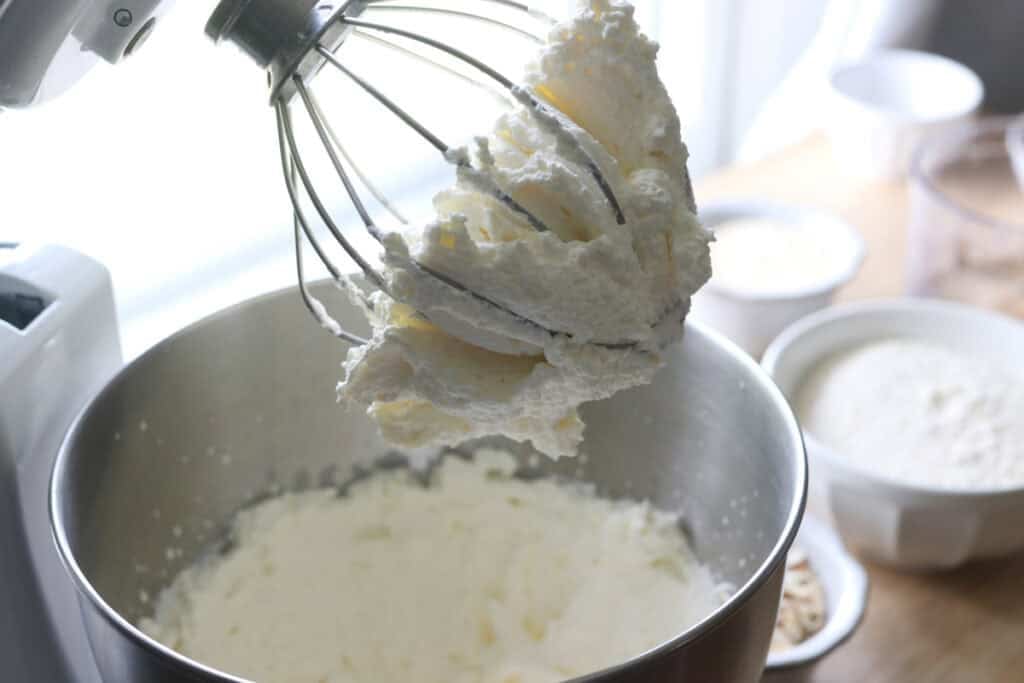
- In a mixing bowl, beat the heavy cream until stiff peaks form to make whipped cream. Place in the fridge.
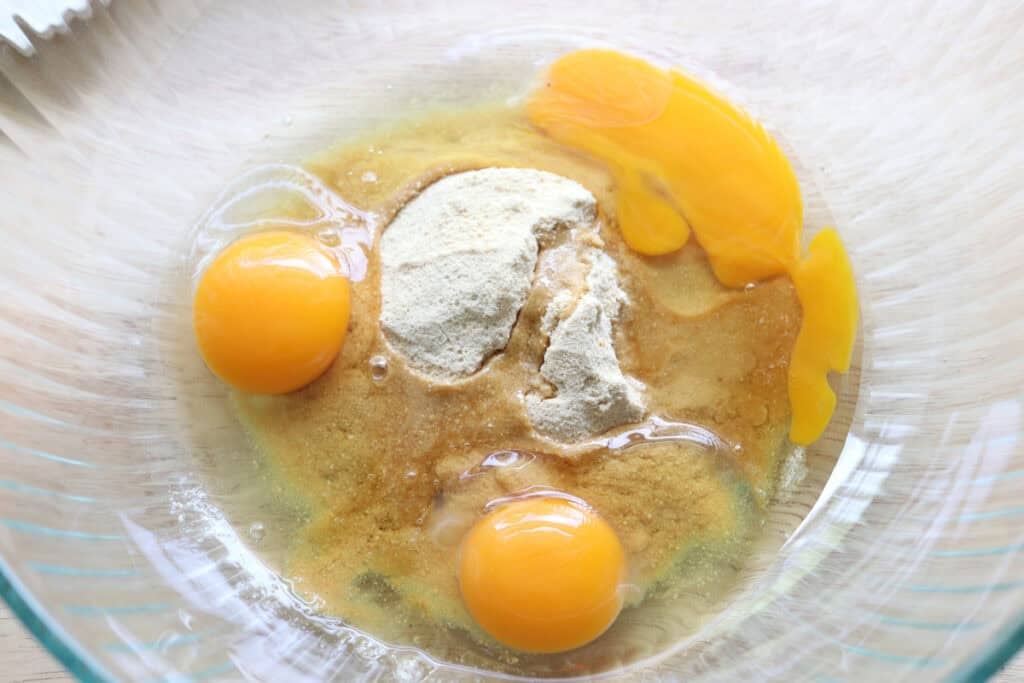

- In a separate bowl, beat the eggs, sugar, and almond extract for 5-10 minutes, until fluffy and lighter in color.
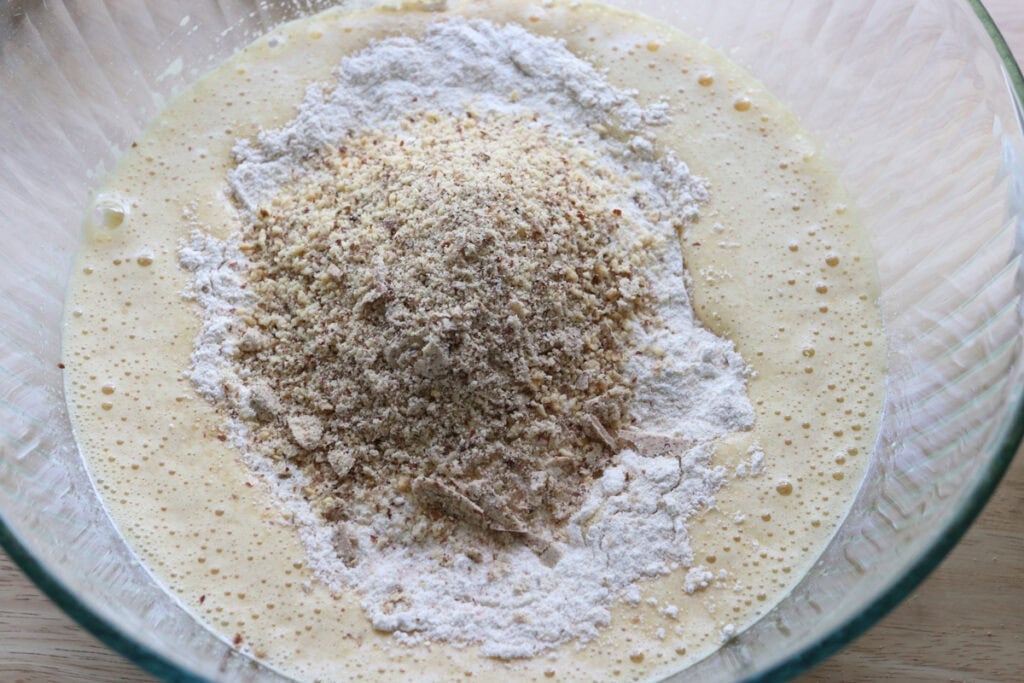
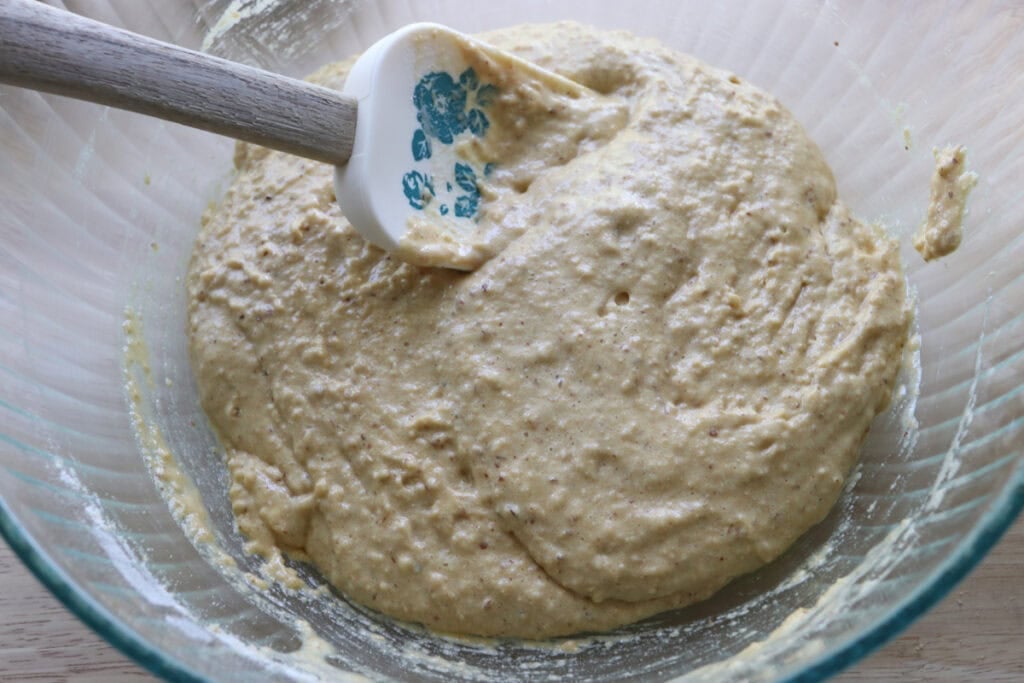
- Fold in the ground almonds, flour, baking powder, and salt until smooth.
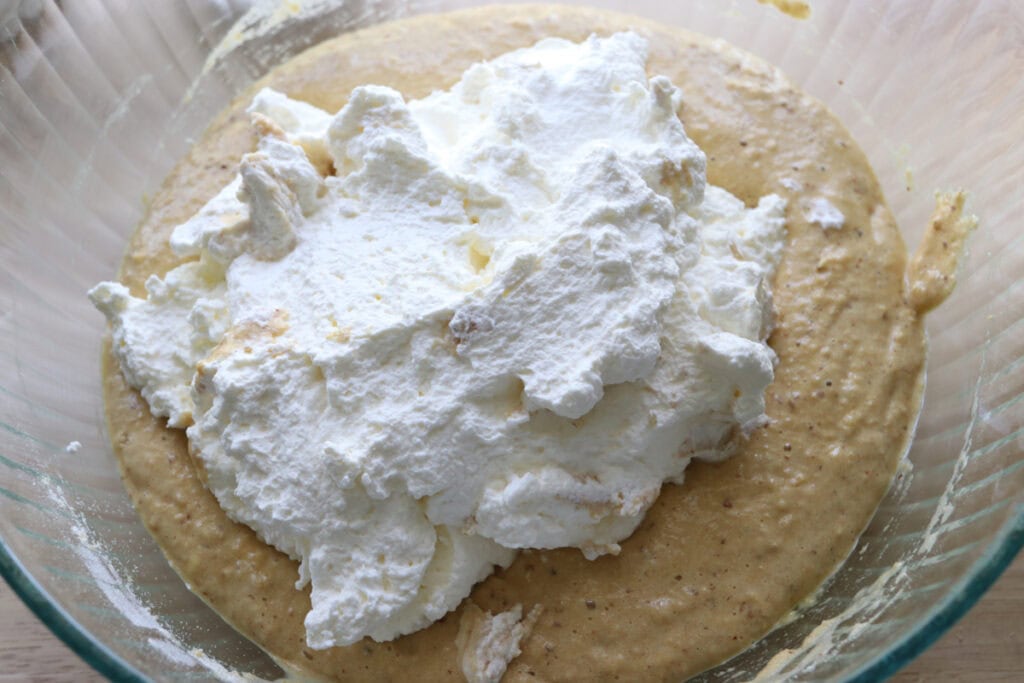
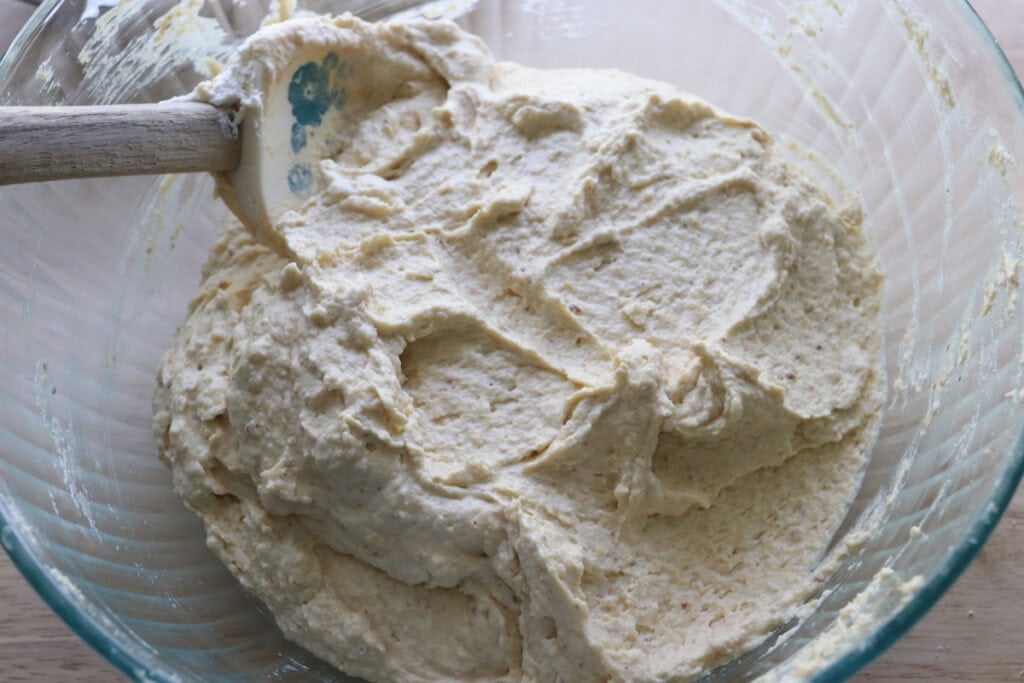
- Gently fold in the chilled whipped cream using a spatula until smooth. Be careful not to deflate the batter.
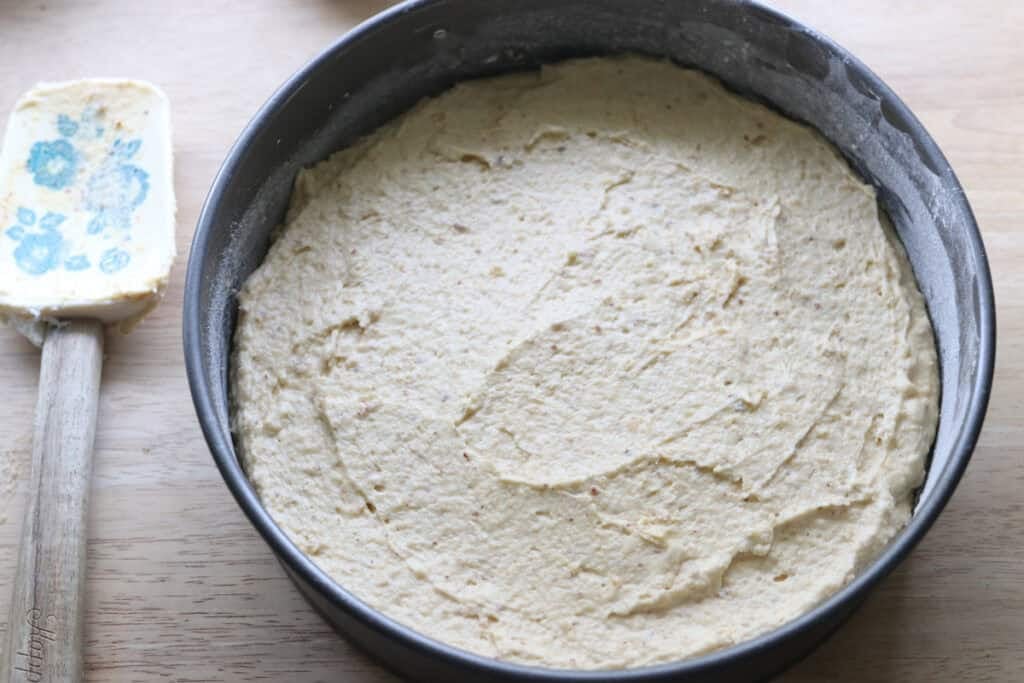
- Pour the batter into the prepared pan.
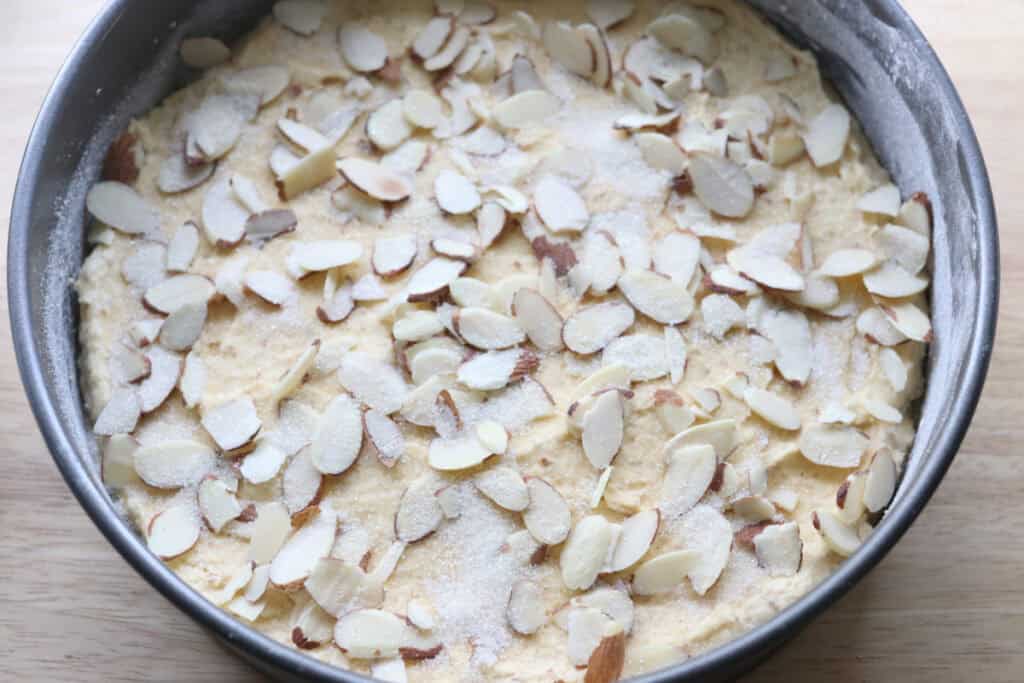
- Top with slivered almonds and sprinkle with sugar.
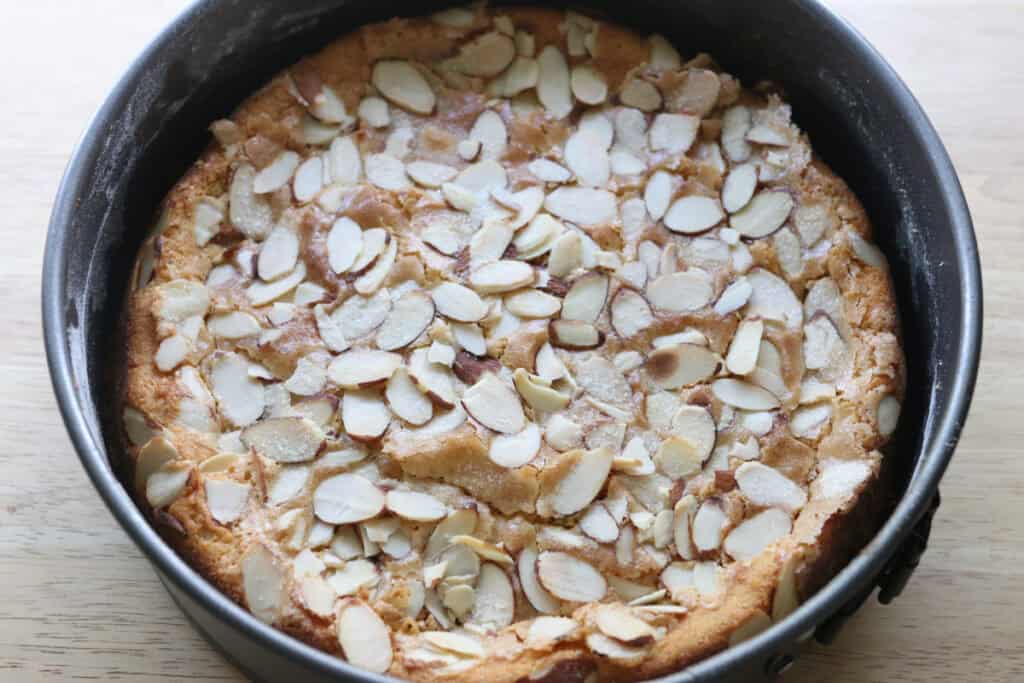
- Bake for 38-45 minutes, until the edges turn golden brown and a toothpick inserted in the middle comes out clean.
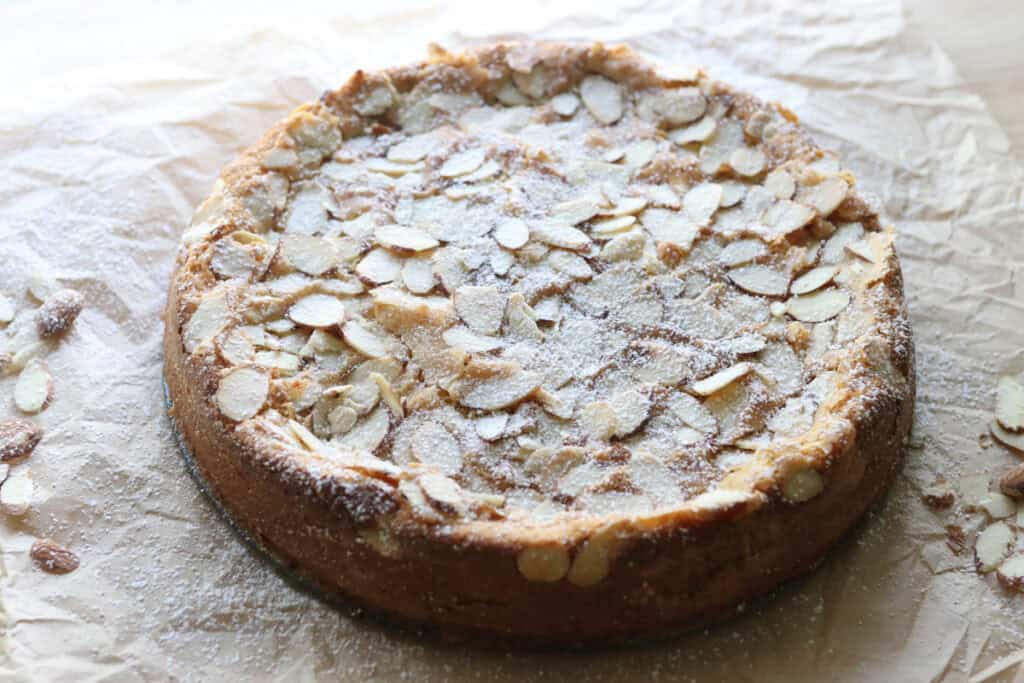
- Allow the cake to cool for 10 minutes, then release it from the pan. If using a cake pan, remove from the cake pan after 10 minutes and allow to cool on a wire rack.
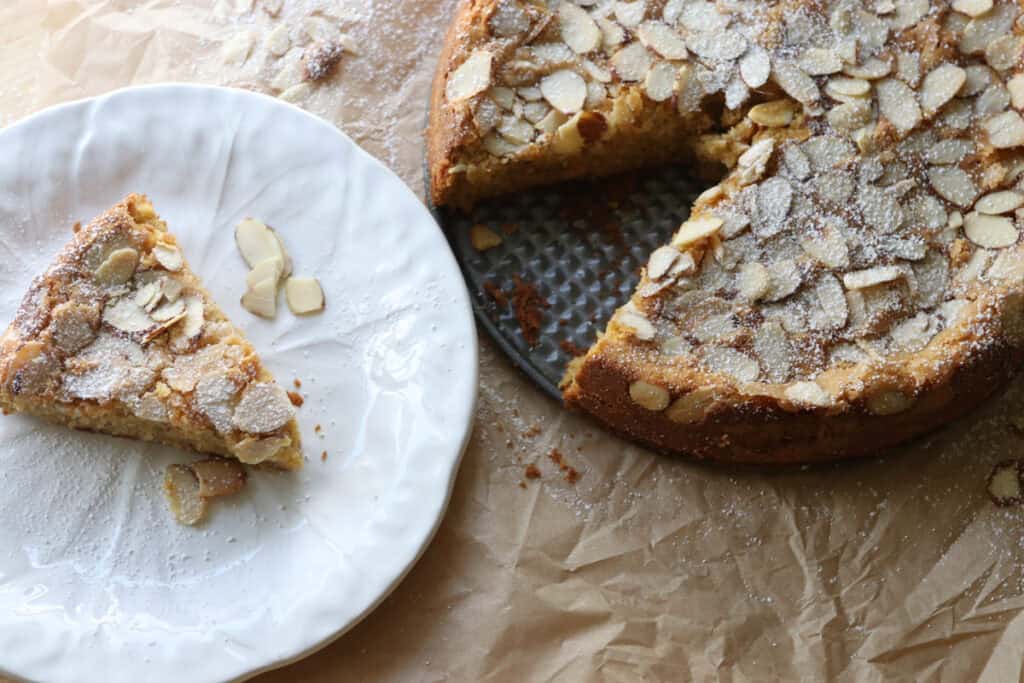
- Top with powdered sugar if desired.
Recipe Variations
Swap the almonds for hazelnuts. Use hazelnut extract instead of almond extract and top with chopped toasted hazelnuts. You will end up with something closer to a Frangelico situation, nutty and rich with a slightly darker flavor.
Add a layer of jam. Spread a thin layer of raspberry or apricot jam over the batter before adding the almond topping. The tartness cuts through the richness and gives you that classic almond croissant filling vibe.
Use spelt berries instead of wheat. Spelt mills into a lighter, slightly sweeter flour that works beautifully here. The texture will be a bit more delicate, and the flavor leans nutty without any bitterness.
Turn it into muffins. Divide the batter into a muffin tin, top each one with the almonds and sugar, and bake for 18 to 22 minutes. You get individual portions with more crunchy topping per bite.
Storage Tips
Room temperature: Store it covered loosely with foil or in a cake dome for up to three days. The fresh milled flour actually helps it stay moist longer than white flour would. Just do not wrap it tightly or the topping loses its crunch.
Refrigerator: If your kitchen is warm or humid, refrigerate it in an airtight container for up to five days. Let it come to room temperature before serving, or warm individual slices in the microwave for 15 seconds to bring back that just-baked feel.
Freezer: Wrap the whole cake or individual slices tightly in plastic wrap, then in foil. Freeze for up to two months. Thaw in the fridge overnight, then bring to room temperature. The texture holds up surprisingly well because the almond paste keeps everything tender even after freezing.
Reheating: If you want to revive the topping, pop a slice in a 300-degree oven for about 5 minutes. The almonds will crisp back up and the cake will taste fresh again. Microwaving works in a pinch, but you lose the crunchy top.
Troubleshooting Common Problems
The cake is too dense or heavy.
This usually means one of three things. First, you did not cream the butter and sugar long enough. If the mixture is not light and fluffy before you add the eggs, you lose the air that gives the cake lift. Go for at least five minutes on medium speed.
Second, you overmixed the batter after adding the flour. Fresh milled flour develops gluten faster than white flour, and overmixing turns tender crumb into tough crumb. Stir just until the dry streaks disappear, then stop.
Third, your baking powder might be old. Test it by dropping half a teaspoon into hot water. If it does not fizz immediately, toss it and buy fresh. Dead leavening equals flat cake.
The top is browning too fast but the center is raw.
Your oven is running hot, or you are baking on the wrong rack. Move the cake to the center rack and drop the temperature by 25 degrees. Cover the top loosely with foil for the last 10 to 15 minutes to slow the browning while the inside finishes. Fresh milled flour can also cause faster browning because of the natural sugars in the wheat germ. Keep an eye on it and trust your senses over the timer.
If it is too thin and runny, you either added too much milk or your flour was milled too coarse and is not absorbing properly. You can add a tablespoon or two more flour, but the better move is to just bake it as is. It might take a few extra minutes, but it will still set up.
The topping is not browning or crisping.
Your oven may not be hot enough. If it is not browning, crank the oven up 25 degrees for the last five minutes or hit it with the broiler for 60 seconds. Watch it closely so it does not burn.
The cake is dry.
You overbaked it, or you measured the flour by volume instead of weight. Fresh milled flour is inconsistent when measured by cups, and too much flour dries everything out. Weigh your flour next time.
If it is already baked and dry, brush the top with a simple syrup made from equal parts sugar and water while the cake is still warm. It will soak in and add moisture back without making it soggy.
The cake sticks to the pan.
You did not line the bottom with parchment, or you skipped greasing and flouring the sides. Fresh milled flour has more texture and clings harder than white flour. Let the cake cool in the pan for 10 minutes, then run a knife around the edge before turning it out.
Most problems with this cake come from treating fresh milled flour like all-purpose. It is not. It is thirstier, denser, and more flavorful. Once you adjust your expectations and techniques, it becomes easy.
Extra FAQs
Can I use store-bought all-purpose flour instead of fresh milled?
Yes, but the flavor will not be the same. You will lose that nutty, slightly sweet depth that fresh milled flour brings. If you do swap it, use less flour and expect a lighter, less complex crumb. The cake will still work, it just will not taste as interesting.
Can I make this without a stand mixer?
Yes. Use a hand mixer or even a whisk if your arm is up for it. The key is creaming the butter and sugar until light and fluffy, which takes longer by hand but is doable. Just be patient and do not skip that step or the cake will be dense.
What kind of wheat berries should I use?
Soft white wheat is the closest to all-purpose flour and gives you a mild, slightly sweet flavor. Hard white wheat has more protein and a bit more chew, so expect a different flavor and texture.
Why does my fresh milled flour look darker than store-bought?
Because it contains the bran and germ, which are darker in color. Commercial white flour strips those parts out, leaving only the white endosperm. The darker color means more nutrients and more flavor. Your cake will look more golden-brown than pale yellow, and that is exactly what you want.
Can I double the recipe?
Absolutely. Use two 9-inch pans or one 9×13 pan. The baking time will be similar for two rounds, but add about 10 minutes if you are using a 9×13. Just check for doneness with a toothpick and watch the color of the topping.
Why is my cake cracking on top?
Cracks happen when the oven is too hot or the batter is too thick. Lower the temperature by 25 degrees and make sure your batter is pourable, not stiff. A few small cracks are normal and get covered by the almond topping anyway, so do not stress unless it is a full canyon situation.
Almond Croissant Made with Fresh Milled Flour
Ingredients
Cake Batter:
- ⅓ cups whole raw almonds (52 grams)
- 1 ¾ cups heavy cream 414 grams
- 1 ¾ cups freshly milled soft white wheat flour finely milled (201 grams)
- 2 teaspoons baking powder
- ½ teaspoon salt
- 3 eggs
- ¾ cup sugar 150 grams
- 2 teaspoons almond extract
Topping:
- ⅓ cup slivered almonds 35 grams
- 1 tablespoon sugar
- Powdered sugar optional
Instructions
- Preheat the oven to 350 degrees F. and butter and flour a 9 inch springform pan.
- In a food processor or blender, chop the whole almonds until mostly ground. You want them ground pretty well, but not as fine as flour.
- In a mixing bowl, beat the heavy cream until stiff peaks form to make whipped cream. Place in the fridge.
- In a separate bowl, beat the eggs, sugar, and almond extract for 5-10 minutes, until fluffy and lighter in color.
- Fold in the ground almonds, flour, baking powder, and salt until smooth.
- Gently fold in the chilled whipped cream using a spatula until smooth. Be careful not to deflate the batter.
- Pour the batter into the prepared pan.
- Top with slivered almonds and sprinkle with sugar.
- Bake for 38-45 minutes, until the edges brown and a toothpick inserted in the middle comes out clean.
- Allow the cake to cool for 10 minutes, then release it from the pan.
- Top with powdered sugar if desired.




How much butter?
There is no butter in this recipe. Just enough to oil the pan