Easy Einkorn Sandwich Bread with Freshly Milled Flour
This post may contain affiliate links. Please read our Disclosure Policy.
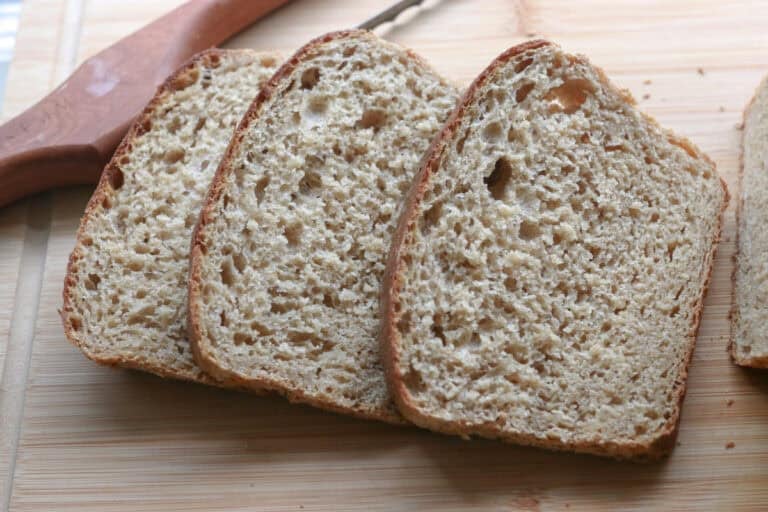
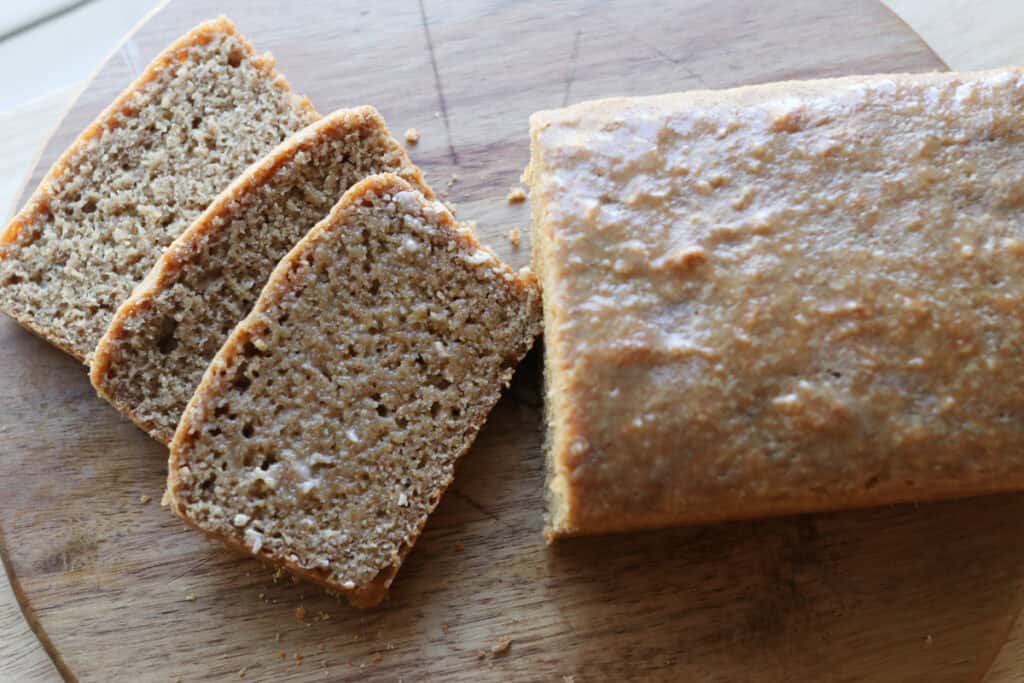
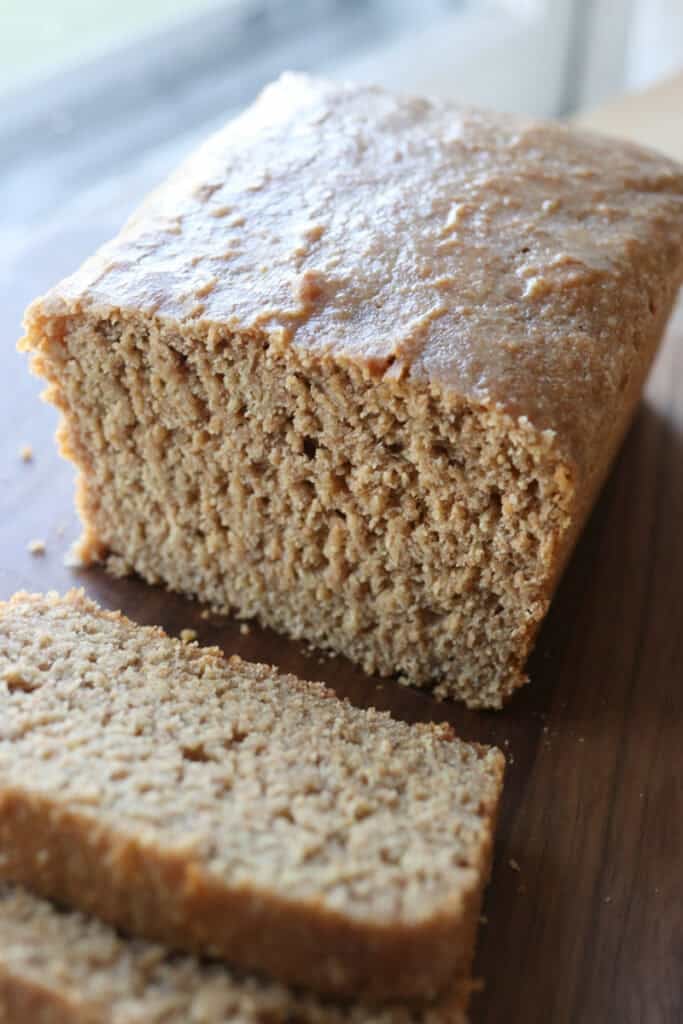
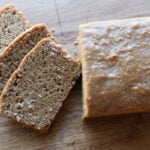
Fresh milled einkorn flour is wildly misunderstood, mostly because people assume ancient grains automatically mean dense, heavy loaves that taste like cardboard. This einkorn bread recipe proves otherwise. It’s soft enough for a kid’s lunch box, sturdy enough to hold up under a loaded turkey club, and has this subtle nutty sweetness that makes plain toast with butter feel like an event. The texture is tender but structured, the crumb is even, and the flavor is deep without being aggressive. This isn’t health food posing as bread. It’s legitimately good bread that happens to be made from an ancient grain you milled yourself. This bread rewards you for milling your own flour, and it doesn’t punish you if you’re not a professional baker. The texture is forgiving, the flavor is alive, and it holds up to whatever you throw at it, whether that’s almond butter, a fried egg, or just good salted butter. It’s the kind of loaf that makes you want to bake again, which is the whole point. Once you taste what freshly milled einkorn can do, going back to the supermarket feels like a downgrade you don’t need to accept.
What Makes This Recipe Great
The flavor is genuinely exceptional. Freshly milled einkorn has this naturally sweet, nutty flavor that makes every slice interesting, even without toppings. It’s the kind of bread you’ll catch yourself eating straight from the cutting board.
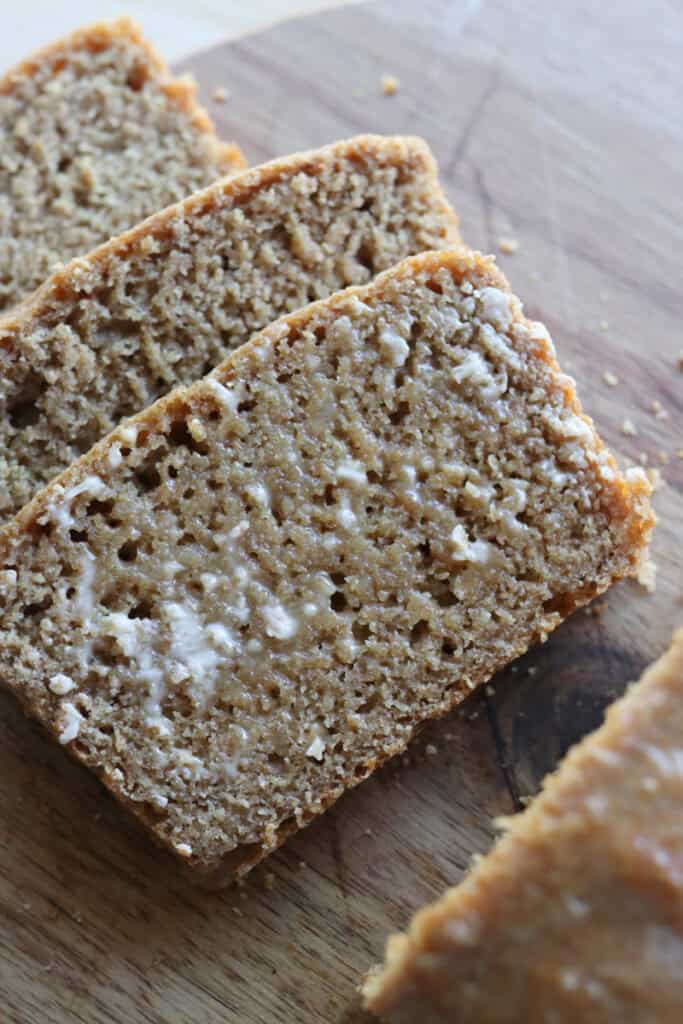
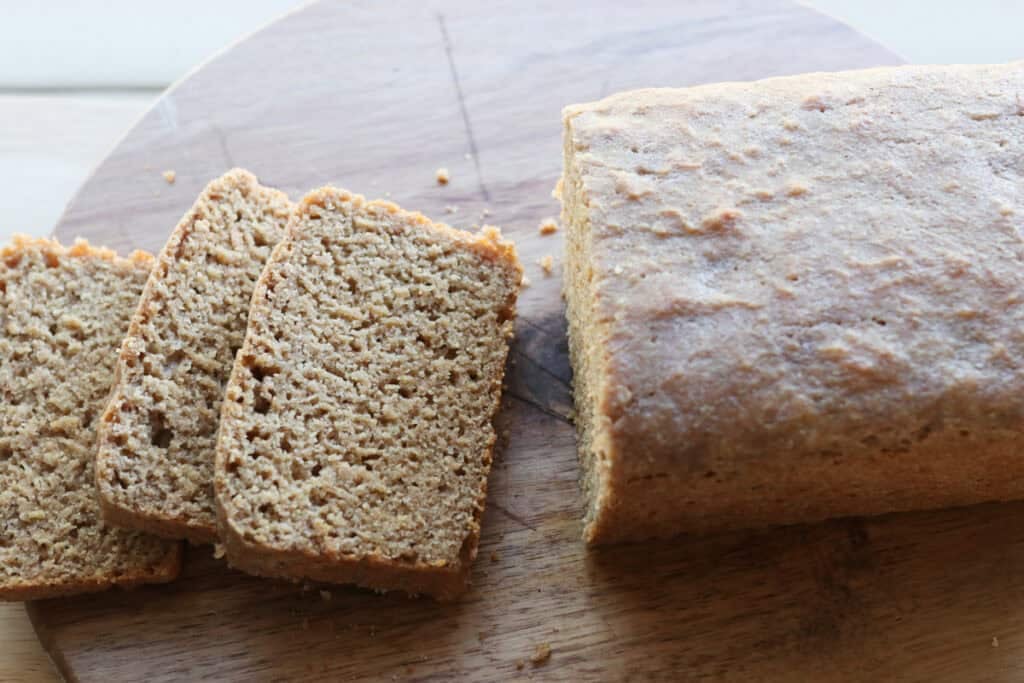
The texture defies expectations. You get a soft, tender crumb that actually stays soft for days, not the dry, crumbly mess that most whole grain breads become by day two. It slices cleanly without falling apart and holds up to heavy sandwich fillings without getting soggy.
It’s surprisingly beginner-friendly. Despite using an ancient grain and freshly milled flour, this einkorn sandwich bread recipe doesn’t require advanced techniques or perfect instincts. While there is a little bit of a learning curve if you are used to working with modern wheat varieties, the dough is forgiving enough that small mistakes won’t ruin your loaf.
The nutritional profile is impressive without being the main selling point. Einkorn is an ancient grain that many people find easier to digest than modern wheat. You’re getting whole grain nutrition in a form that actually tastes good enough to eat regularly.
Most importantly, this recipe makes you want to bake again. Once you taste what fresh flour can do, store-bought bread feels like a downgrade. That’s the real win here – it turns bread baking from an intimidating project into something you’ll actually look forward to doing.
For more freshly milled recipes, try this Almond Croissant Cake or this Glazed Strawberry Bread!
Tips for Success
Mill your flour right before mixing. Freshly milled flour starts losing flavor and nutrients within hours of grinding. The oils in the bran oxidize quickly, so the longer it sits, the less vibrant it tastes. If you absolutely have to mill ahead of time, store the flour in an airtight container in the freezer and use it within a week.
Don’t add extra flour while shaping. Einkorn dough is sticky, and your first instinct will be to dust it heavily with flour to make it easier to handle. Resist. Extra flour dries out the dough and makes the final loaf dense. Use a wet bench scraper or wet hands instead. The dough will still be tacky, but it’ll behave.
Watch the dough, not the clock. Rise times are guidelines, not rules. Einkorn ferments faster than modern wheat, especially in a warm kitchen. Your dough is ready when it’s somewhat risen and passes the poke test, not when the timer goes off. In a cold kitchen, it might take an extra hour. In a hot kitchen, it could be done in half the time.
Use an instant-read thermometer. Einkorn bread browns quickly, so the crust can look done while the inside is still doughy. Pull the loaf when the internal temperature hits 190-200°F. This is the most reliable way to avoid underbaking.
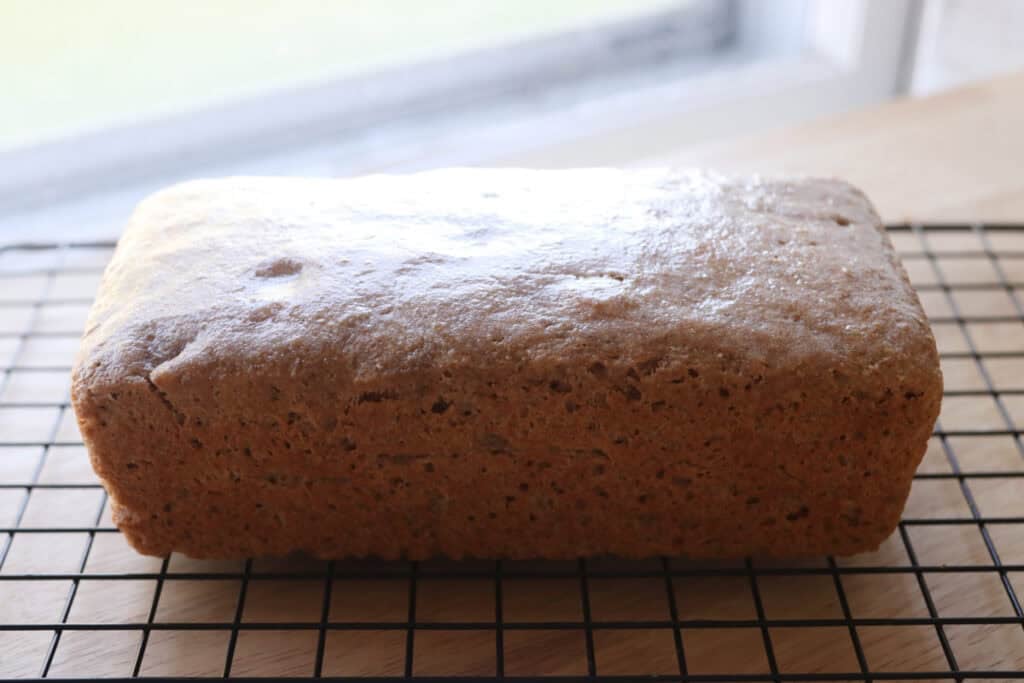
Let the bread cool completely before slicing. This is the hardest part, but it matters. If you cut into the loaf while it’s still warm, the crumb will be gummy and the slices will compress. Let it sit on a wire rack for at least an hour. The texture firms up as it cools, and the flavor actually improves.
Ingredients & What They Do
Einkorn wheat berries – These are the whole grain kernels you’ll mill into flour. Look for organic einkorn from a trusted source like Jovial or Azure Standard. The berries should smell slightly sweet and nutty, not stale or musty. If they smell like nothing, they’re probably old. Freshly milled einkorn flour oxidizes quickly, so mill right before you mix the dough for the best flavor.
Water – This hydrates the flour and activates the gluten. Einkorn needs more water than you’d expect because the bran absorbs a lot. Too little, and your dough will be stiff and dry. The dough should feel tacky but not soupy. If it’s tearing instead of stretching, add another tablespoon of water.
Honey or maple syrup – This feeds the yeast and adds a subtle sweetness that balances the earthy flavor of whole grain. Sugar works too, but honey and maple syrup keep the crumb softer. Don’t skip this. Einkorn can taste a little flat without a touch of sweetness.
Salt – Controls fermentation, strengthens gluten, and makes the bread actually taste like something. Without enough salt, the loaf will be bland and the dough will ferment too fast, which leads to a sour, overly tangy flavor.
Instant yeast – Instant yeast works faster and more predictably than active dry yeast. You can use active dry if that’s what you have, but bloom it in a bit of the water first.
Butter or olive oil – Fat tenderizes the crumb and extends shelf life. Butter gives a richer flavor, olive oil makes it slightly more rustic. Melted coconut oil works in a pinch, but it can make the bread taste faintly tropical, which is weird in a sandwich loaf.
Recipe Variations
Honey swap – Use maple syrup, agave, or even brown sugar. Each one shifts the flavor slightly. Maple syrup makes it a little earthier, agave keeps it neutral, and brown sugar adds a faint molasses note. Avoid artificial sweeteners. They don’t feed the yeast the same way.
Olive oil swap – Butter avocado oil, or melted coconut oil all work. The texture stays soft, but the flavor changes. Butter makes it richer, coconut oil adds a hint of sweetness. If you’re dairy-free, go with olive or avocado oil for the cleanest flavor.
Add seeds or grains – Toss in a handful of sunflower seeds, flax seeds, or rolled oats for texture. Mix them into the dough during the final fold, not at the beginning, or they’ll interfere with gluten development. Seeds add crunch and make the loaf feel more substantial.
Herb or garlic version – Fold in rosemary, thyme, or roasted garlic after the first rise for a savory, more flavorful loaf of bread that’s incredible with soup. Don’t add raw garlic. It’ll inhibit the yeast and make the dough smell aggressive in a bad way.
Whole spelt or Khorasan swap – If you don’t have einkorn, you can use freshly milled spelt or Khorasan (Kamut) berries. Both are ancient grains with similar gluten structures. Spelt is slightly sweeter and rises a bit higher. Khorasan has a buttery flavor and makes a denser loaf. Adjust hydration as needed. Spelt absorbs less water, so start with 10% less and add more if the dough feels stiff.
Helpful Tools & Supplies
Whether you’re just dipping your toes into the world of fresh milled flour or you’re a seasoned home baker, I’ve taken the guesswork out of what you truly need. All of these tools and resources are available in my shop, designed to help your journey be smooth and nourishing:
Grain Mills
- NutriMill Classic Grain Mill – My go-to for fine, consistent milling; perfect for sandwich breads and everyday baking.
- NutriMill Harvest Grain Mill – Stone-ground elegance: this model delivers whole-grain flavor with a beautiful appearance.
Mixers
- Ankarsrum Mixer – A powerhouse kitchen companion with multiple speeds and attachments—ideal for kneading bread dough effortlessly.
Baking & Bread Tools
- Bread Bow Knife – Artisan-made with a high-carbon steel blade and cherry wood handle—this knife slices loaves with ease.
- Sourdough Essentials Kit With Starter – Complete starter kit that includes dehydrated sourdough starter, banneton baskets, a dough whisk, scoring lame, and more.
Cookbooks & eBook Bundles
- Everyday Whole Grains Vol. 1 & 2 (printed & digital) – Packed with 70+ recipes built around fresh milled flour, from breads to snacks and desserts.
- The Fresh Breads Bundle – A comprehensive set including eBooks like The Perfect Loaf, the Cookie Jar, bulk baking guides, and a sourdough mini‑course—all centered on fresh milled flour.
- Freshly Milled Made Simple Guide – A video-based guide that walks you through milling and baking basics, making the process feel easy and approachable.
Specialty Items
- Dehydrated Sourdough Starter – Just add water and flour to rehydrate this starter—perfect for bakers without an active sourdough culture.
- I Knead Fresh Flour Mug – A charming, handmade 12 oz ceramic mug—great for coffee breaks during dough rising!
Why These Are Worth It
Every tool in this collection has been personally vetted to support you in baking with fresh milled flour. From the grain mills that make your flour, to mixers that knead dough, to resources that teach you every step—it’s all here to make sure your homemade bread journey is joyful, nourishing, and successful.
➡️ Explore all of these items and more in the Generation Acres Farm Shop — your one-stop spot for fresh milled flour baking essentials.
Equipment You’ll Need
8.5×4.5-inch loaf pan – Standard size. Einkorn dough is softer and less elastic than regular wheat dough, so it needs the pan walls to guide its rise.
Kitchen scale – Freshly milled flour doesn’t pack the same way as store-bought, so volume measurements will throw off your ratios. Weighing your ingredients keeps the hydration consistent, which is the difference between a soft loaf and a brick.
Stand mixer (optional but helpful) – You can absolutely mix this by hand, but a stand mixer with a dough hook makes the initial mix faster and less messy. Just don’t overdo it. Two to three minutes on low speed is plenty.
Dough Scraper
Cooling Rack
How to Make Easy Einkorn Sandwich Bread with Freshly Milled Flour
Ingredients:
- 2 tablespoons olive oil
- 2 tablespoons honey
- 1 ⅓ cups warm water (293 grams)
- 2 teaspoons salt
- 1 tablespoon lemon juice
- 6 cups freshly milled einkorn flour, finely milled (510 grams)
- 2 teaspoons instant yeast
Directions:
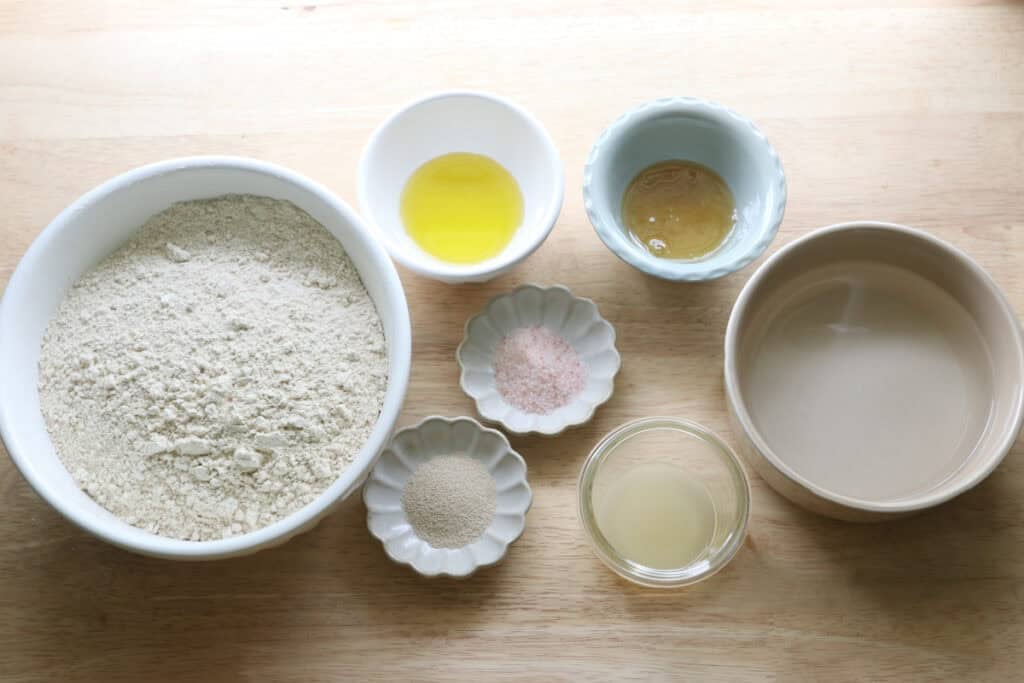
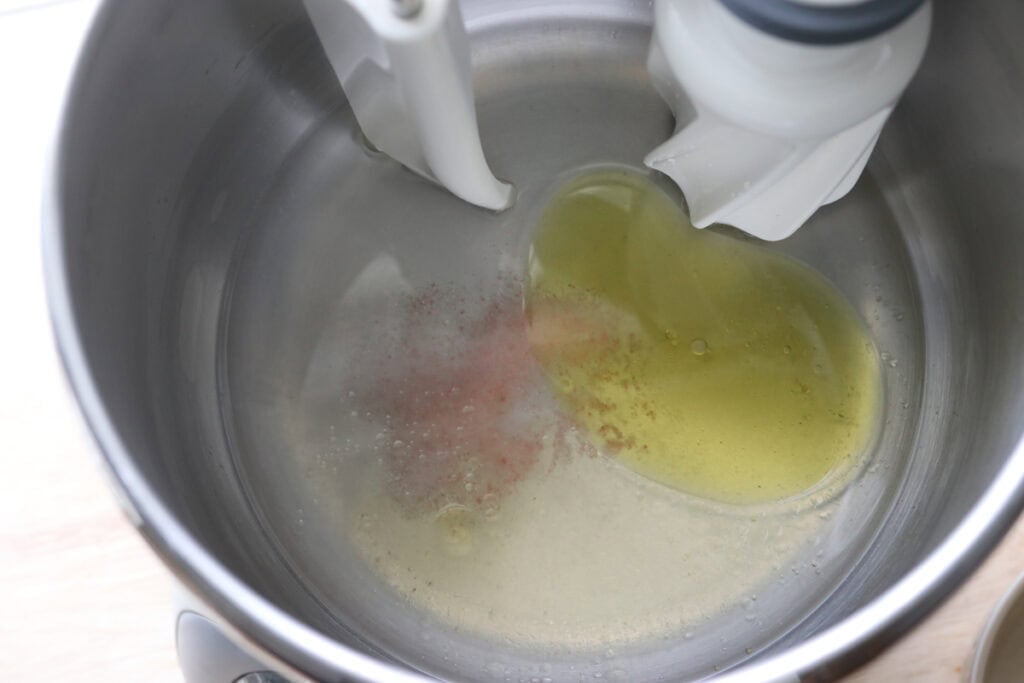
- In the bowl of a stand mixer, combine the oil, honey, water, salt, and lemon juice.
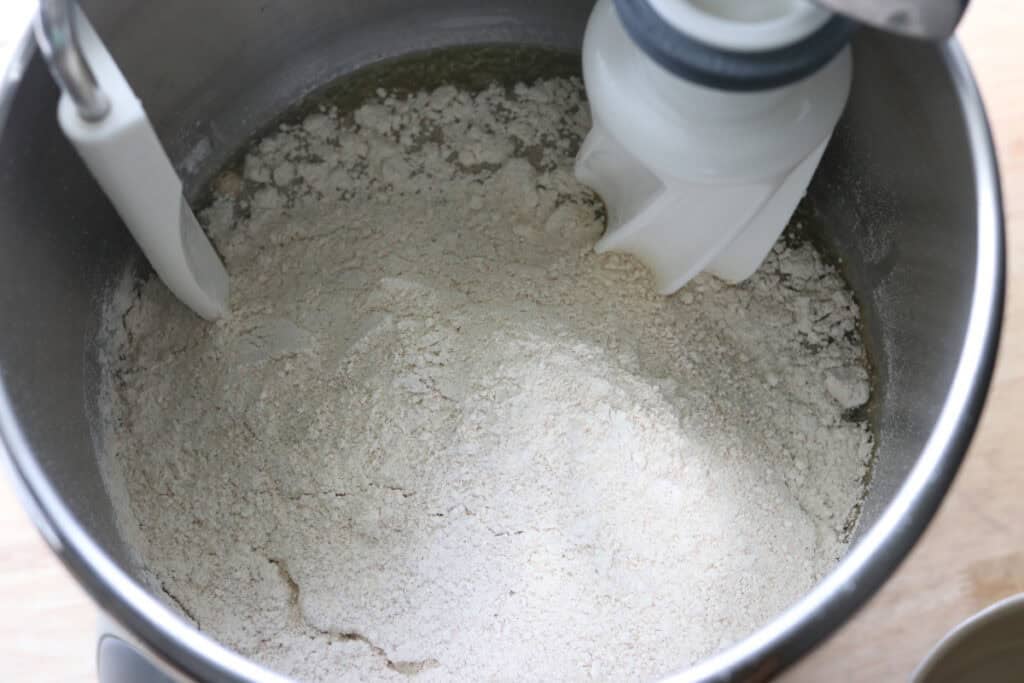
- Add 5 cups of the flour and mix just until combined. Let rest for 10 minutes.
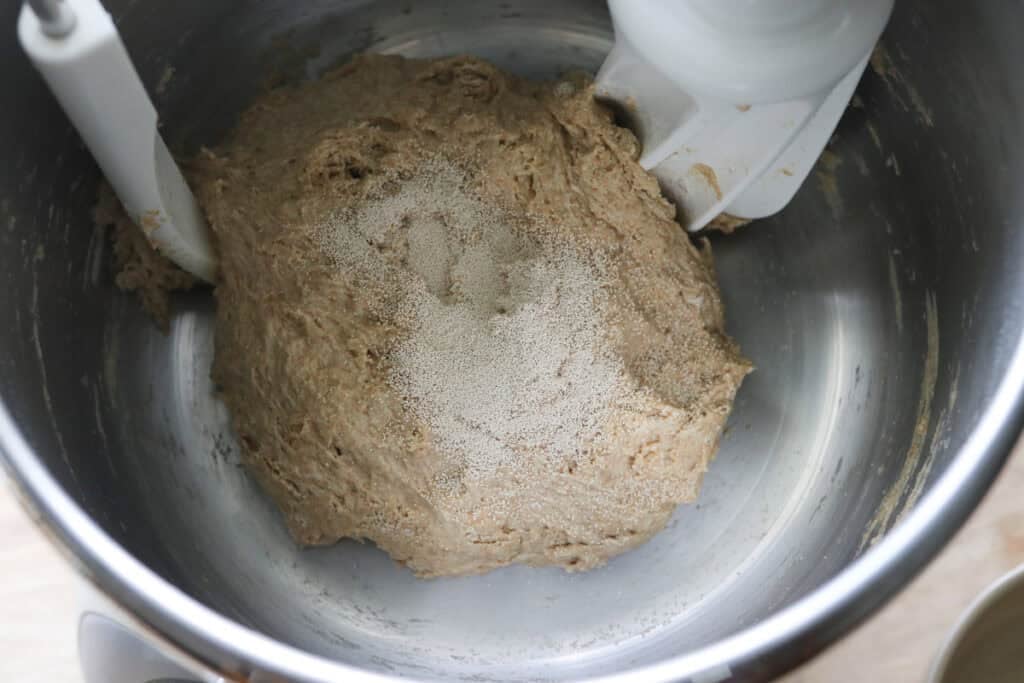
- Add the yeast and remaining 1 cup of flour and mix 2 minutes, just until combined. It will be a very sticky dough.
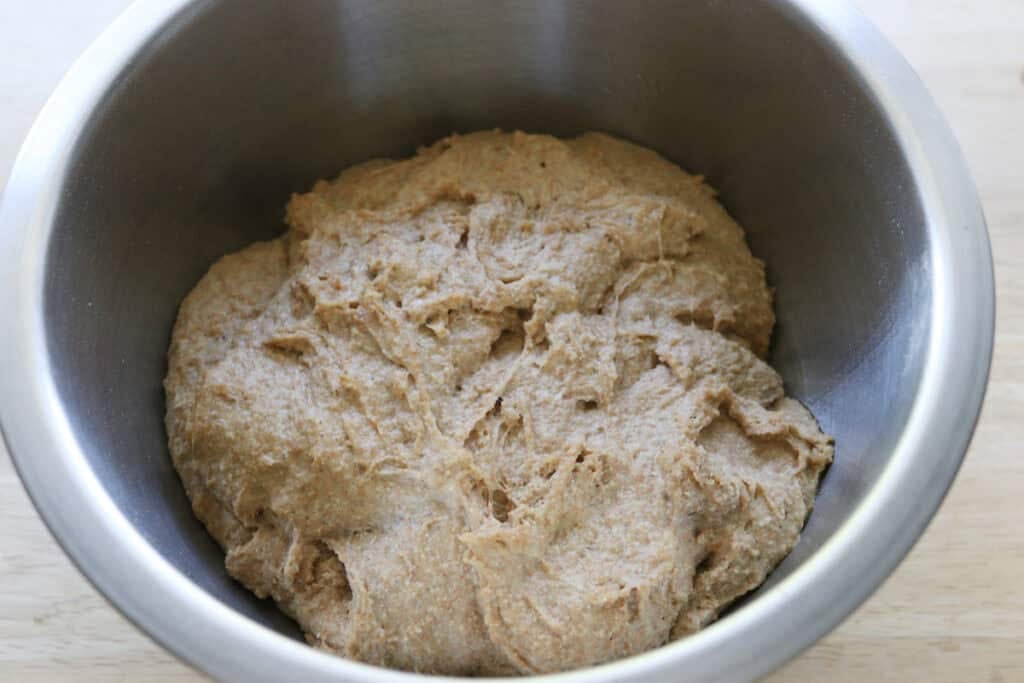
- Use a spatula and dump the dough into a greased bowl. Cover and allow to rise in a warm place for about 35 minutes. It should be somewhat risen, but not doubled in size.
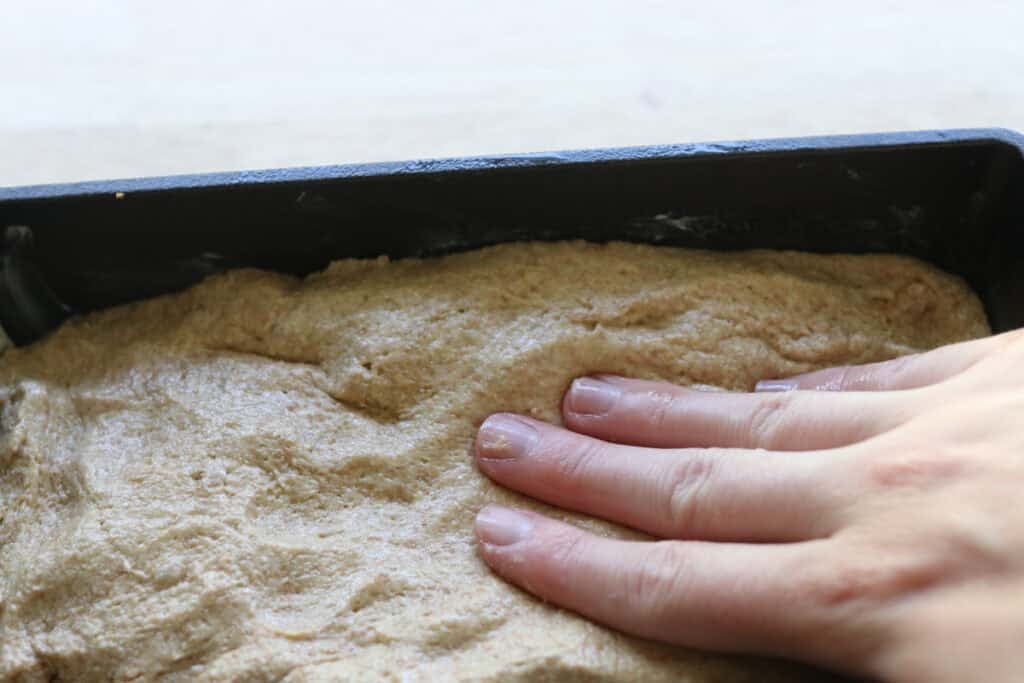
- Thoroughly butter an 8.5 x 4.5 inch loaf pan and pour the batter into the prepared pan. Grease your hands and press the dough into the pan. Use your fingers to smooth out the top of the dough.
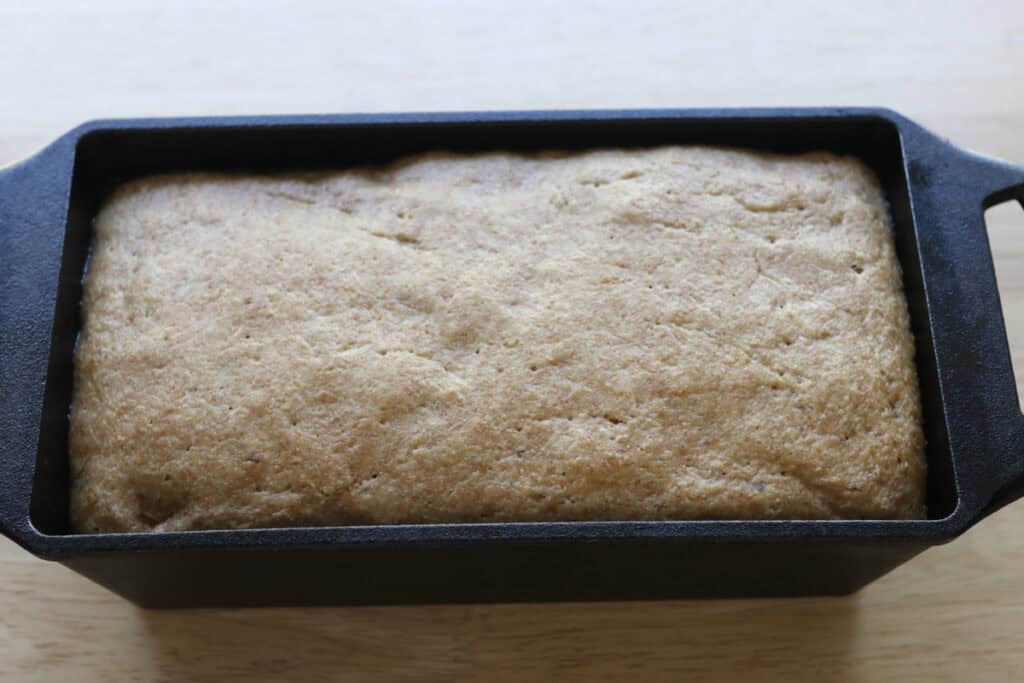
- Cover and place in a warm spot to rise for about 40 minutes to 1 hour. It should be risen to almost the top of the pan (about an inch to half an inch from the top). Do not overproof the dough.
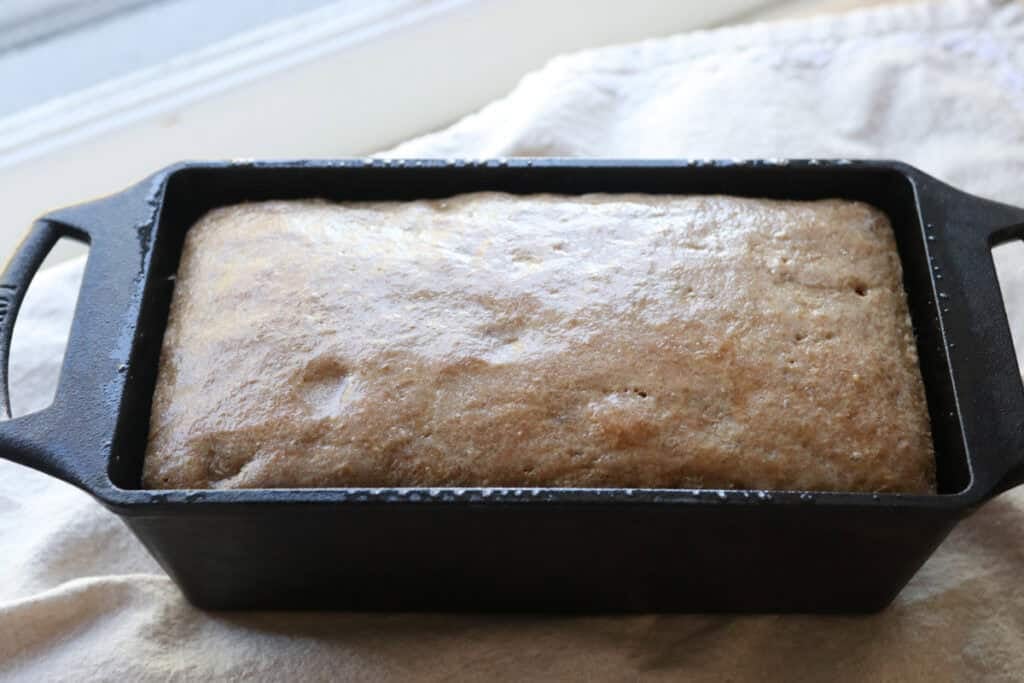
- Preheat the oven to 350 degrees F. and bake for 30-33 minutes, until an internal temperature reads 200 degrees F.
Troubleshooting Common Problems
Dense, heavy loaf – This usually means you over-kneaded the dough or didn’t give it enough time to rise. Einkorn’s gluten is fragile, so aggressive mixing makes it tight and gummy instead of light and airy. Next time, mix just until the dough comes together. Also check your yeast – if it’s old or dead, your bread won’t rise properly.
Dough is too sticky to handle – Einkorn dough is naturally tackier than regular wheat dough because of the higher hydration. Don’t add a bunch of extra flour or you’ll dry out the final loaf. Instead, use a spatula and greased or wet hands to work with it. If it’s truly soupy and won’t hold shape at all, you may have added too much water or milled the flour too coarse. Let the dough rest for 15 minutes so the flour can fully hydrate, then reassess.
Loaf didn’t rise much – Check your environment. Einkorn dough rises best in a warm spot, around 75-78°F. If your kitchen is cold, it’ll take much longer. Try putting the dough in the oven with just the light on, or near a warm appliance. If the dough didn’t rise at all, your yeast is likely dead.
Crust is too hard – Overbaking is the usual culprit. Einkorn bread browns faster than bread with white flour, so start checking for doneness a few minutes early. The internal temperature should hit 190-200°F. If your oven runs hot, lower the temperature by 25°F. You can also brush the top of the loaf with melted butter right when it comes out of the oven to soften the crust.
Bread tastes bland – You probably didn’t use enough salt, or your einkorn berries are old and stale. Fresh berries should smell sweet and nutty. If they smell like nothing, the flavor won’t be there. Also, make sure you’re adding the honey or maple syrup – it balances the earthiness and brings out the grain’s natural sweetness.
Loaf collapsed in the oven – This means the dough over-proofed. Einkorn ferments faster than modern wheat, so if you let the dough rise too long, the gluten structure breaks down and can’t support the loaf. Watch for the dough to get puffy in size, not double. When you poke the dough, it should spring back slowly. If it doesn’t spring back at all, it’s over-proofed.
Gummy texture inside – The bread wasn’t fully baked. Even if the crust looks done, the inside might still be doughy. Use an instant-read thermometer and don’t pull it out until it hits at least 190°F. Another cause is slicing the bread while it’s still hot. Let it cool completely on a wire rack before cutting into it, or the crumb will be gummy and compressed.
Slices fall apart or crumble – Your hydration was probably too low, or you added too much extra flour while shaping. Einkorn needs that higher moisture level to stay together. Make sure you’re weighing your ingredients and not adding flour unnecessarily. If you’re using pre-milled all einkorn instead of freshly milled, it may absorb water differently – add a tablespoon or two more water if the dough feels stiff.
Storage Tips
Einkorn bread dries out faster than commercial bread because it doesn’t have dough conditioners or preservatives.
Store the loaf at room temperature in a bread box or a loosely closed plastic bag. Don’t seal it tightly or the crust will get soggy. It’ll stay soft for three to four days. After that, it’s better toasted.
For longer storage, slice the loaf and freeze it in a zip-top bag with as much air pressed out as possible. Pull out slices as you need them and toast straight from frozen. They’ll taste just as good as fresh. Frozen bread keeps for up to three months without any noticeable loss in flavor or texture.
If the loaf starts to stale, don’t toss it. Cut it into cubes, toss with olive oil and salt, and bake at 375°F until crispy. You’ll have croutons that are better than anything you’d buy. Or blitz stale slices into breadcrumbs and freeze those for breading chicken or topping casseroles.
Reheating a whole loaf is tricky because the crust toughens fast. If you need to refresh it, wrap the loaf in foil and warm it in a 300°F oven for 10 to 12 minutes. The interior will soften, and the crust won’t turn to leather. Don’t microwave it. That makes whole grain bread gummy and weird.
Extra FAQs
Can I use store-bought einkorn flour instead of milling my own?
Yes, but the flavor won’t be as vibrant. Freshly milled flour has oils that haven’t oxidized, so it tastes sweeter and more complex. If you’re using pre-milled flour, buy it from a source that mills in small batches and stores it properly. Check the packaging date and use it within a few months for the best results.
Why does my einkorn dough feel different than regular bread dough?
Einkorn has a weaker gluten structure, so the dough will be softer, stickier, and less elastic. It won’t form a tight ball the way dough made from hard red wheat does. This is normal. Don’t try to force it to behave like regular dough or you’ll end up overworking it.
Can I make this recipe without a stand mixer?
Absolutely. Mix the ingredients in a large bowl with a wooden spoon or your hands until everything comes together. It’ll take a few extra minutes, but it works just fine. The minimal kneading requirement actually makes this easier to do by hand than most bread recipes.
How do I know when the dough has risen enough?
Poke it gently with a wet finger – if the indentation springs back slowly and doesn’t fully disappear, it’s ready. If it springs back immediately, give it more time. If it doesn’t spring back at all, you’ve let it go too long.
Is einkorn easier to digest than modern wheat?
Many people report that it is, though this varies from person to person. Einkorn has a different gluten structure than modern wheat, and some find it gentler on their system.
Can I use this dough to make pizza crust?
You can, but einkorn makes a softer, more delicate crust than standard pizza dough. It won’t get super crispy or hold up to very heavy toppings. If you want to try it, roll it thinner than you normally would and par-bake the crust for 5 minutes before adding toppings.
Why does my bread smell sour even though I didn’t use sourdough starter?
Over-fermentation. If the dough sat too long or in too warm a spot, wild yeasts and bacteria in the environment can create sour flavors. This is more common with whole grain flours because they ferment faster. Stick to the recommended rise times and keep the dough in a cooler spot if your kitchen is very warm.
How fine should I mill the einkorn berries?
As fine as your mill will go without overheating. A fine grind gives you a lighter, softer crumb. Coarser flour makes denser bread and doesn’t hydrate as evenly. If your mill has adjustable settings, start at the finest setting.
Easy Einkorn Sandwich Bread with Freshly Milled Flour
Ingredients
- 2 tablespoons olive oil
- 2 tablespoons honey
- 1 ⅓ cups warm water 293 grams
- 2 teaspoons salt
- 1 tablespoon lemon juice
- 6 cups freshly milled einkorn flour finely milled (510 grams)
- 2 teaspoons instant yeast
Instructions
- In the bowl of a stand mixer, combine the oil, honey, water, salt, and lemon juice.
- Add 5 cups of the flour and mix just until combined. Let rest for 10 minutes.
- Add the yeast and remaining 1 cup of flour and mix 2 minutes, just until combined. It will be a very sticky dough.
- Use a spatula and dump the dough into a greased bowl. Cover and allow to rise in a warm place for about 35 minutes. It should be somewhat risen, but not doubled in size.
- Thoroughly butter an 8.5 x 4.5 inch loaf pan and pour the batter into the prepared pan. Grease your hands and press the dough into the pan. Use your fingers to smooth out the top of the dough.
- Cover and place in a warm spot to rise for about 40 minutes to 1 hour. It should be risen to almost the top of the pan (about an inch to half an inch from the top). Do not overproof the dough.
- Preheat the oven to 350 degrees F. and bake for 30-33 minutes, until an internal temperature reads 200 degrees F.