
Easy Freshly Milled Parmesan Chive Drop Biscuits
This post may contain affiliate links. Please read our Disclosure Policy.
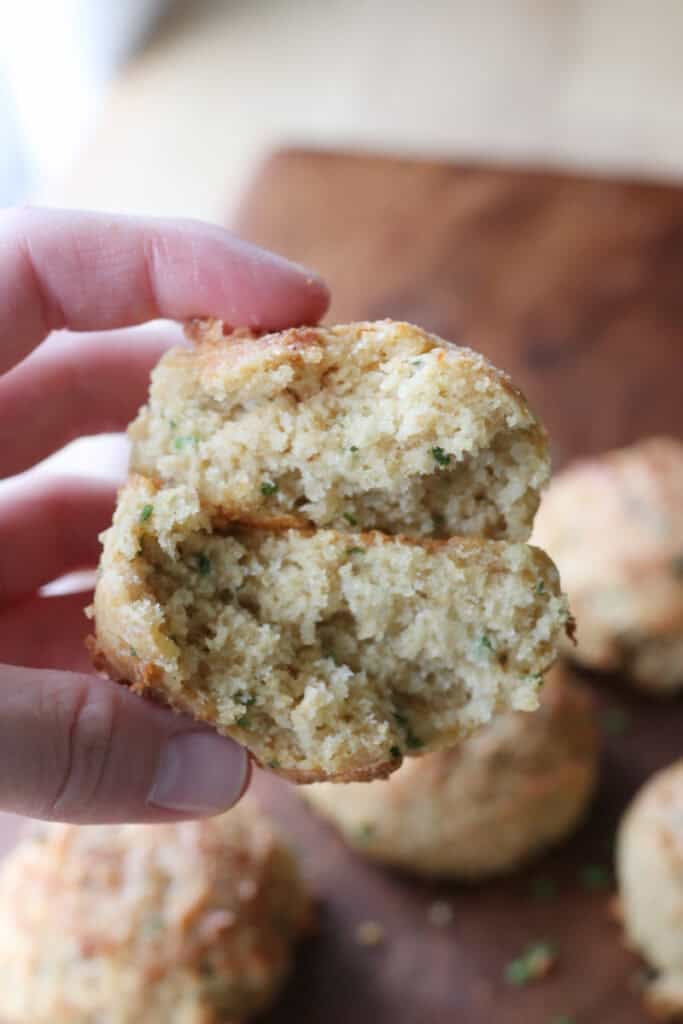
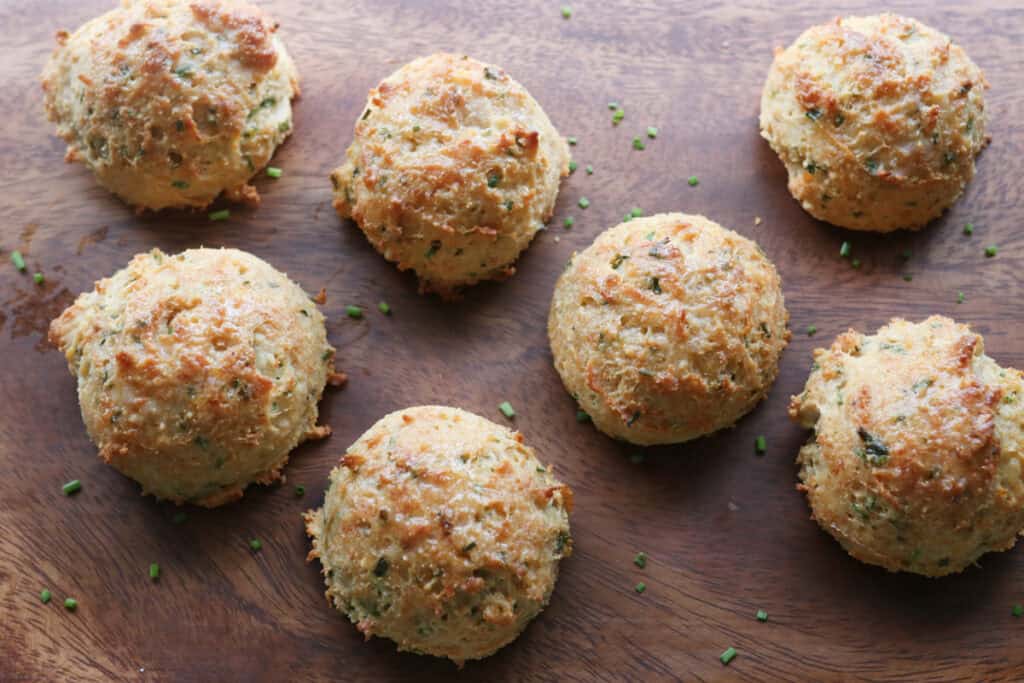
Drop biscuits are what happens when you want homemade bread but refuse to deal with rolling pins, flour-covered counters, and the anxiety of cold butter. Made with simple ingredients, these aren’t your standard buttermilk biscuits. They’re made with freshly milled flour and grated parmesan, plus enough chives to make every bite taste like it belongs next to a bowl of soup or a roasted chicken. The texture is shaggy and rough on the outside, tender and steamy inside. They bake up tall with crispy golden crowns that practically beg to be torn apart while still warm. Drop biscuits are the easiest path into this world because they skip all the fussy cutting and folding. You literally stir, scoop, and bake. The texture stays tender and cloud-like inside with crispy, golden edges that shatter when you pull them apart. Every bite tastes alive, almost nutty from the flour, deeply savory from the cheese, and bright from the chives. If you’ve been milling flour and wondering what recipe will make everyone understand why you bought that countertop mill, this is it.

What Makes This Recipe Great
The freshly milled flour is what elevates these from good biscuits to something you’ll want to make over and over. Commercial flour is stripped of the bran and germ, which contain most of the flavor and nutrients. When you mill your own, you get the whole grain, and that means deeper flavor, better texture, and a level of freshness you can actually taste.
Drop biscuits eliminate all the stress of traditional biscuit-making. No rolling, no cutting, no worrying about whether your dough is too warm or if you’ve overworked it. You mix, you scoop, you bake. The technique is so simple that it puts all the focus on the quality of your ingredients, which is exactly where it should be when you’re working with fresh flour.
The combination of parmesan and chives is understated but powerful. The cheese adds salt and umami without being heavy or greasy, and the chives bring just enough brightness to keep things interesting. You get savory depth, richness from the butter, and that wheaty sweetness from the flour all in one bite. It’s balanced in a way that makes you reach for another biscuit before you’ve finished the first.
These also bake fast. From start to finish, you’re looking at about thirty minutes, which makes them a delightful addition to weeknight dinners, last-minute brunches, , a holiday meal, or whenever you need something warm and homemade without a lot of planning. The dough comes together in less than ten minutes, and while they’re baking, you can set the table or finish the rest of the meal.
Finally, this recipe works as both a standalone snack and a supporting player. Serve them with soup, pile them next to scrambled eggs, slather them with butter and jam, or use them to soak up the sauce from a braise. They’re versatile enough to fit into almost any meal, but interesting enough to stand on their own.
For more freshly milled recipes, try this super easy einkorn sandwich bread or these soft pretzel bites with cheese dip!
Overview of Ingredients
Freshly milled flour: This is the backbone of the recipe and the reason these biscuits taste different from anything made with store-bought flour. Freshly milled whole grain flour brings natural sweetness, nutty depth, and a faint grassy note that plays beautifully with savory ingredients. Hard white wheat works beautifully for a milder flavor, while hard red wheat gives you something more robust and assertive. Soft white wheat creates a more delicate crumb but can make the biscuits a little fragile. If you only have all-purpose flour, the recipe still works, but you lose the complexity and the whole reason you’re here.
Baking powder: This is your leavening agent and what makes the biscuits puff up and turn tender. Freshly milled flour can be denser than commercial flour, so don’t skimp on this. Make sure your baking powder is fresh because old leavening agents give you flat, sad biscuits. If it fizzes when you add it to water, you’re good. If it just sits there, toss it and buy new.
Salt: Salt amplifies every other flavor in the dough, especially the cheese and the natural sweetness of the fresh flour. Without enough salt, these taste flat and boring.
Sour Cream: Sour cream creates the flaky texture and rich flavor. Make sure it’s nice and cold so it doesn’t melt into the flour before baking. Plain Greek yogurt can also be subbed here.
Finely grated Parmesan: This adds sharp, salty, umami-packed flavor that makes these biscuits almost aggressively savory. Grate it yourself from a block because the pre-shredded stuff is coated in cellulose and won’t melt or integrate the same way.
Fresh chives: Chives bring a mild onion flavor and bright green color that cuts through the richness of the butter and cheese. Fresh is essential here because dried chives just don’t pack the same flavor punch. If you can’t find chives, thinly sliced green onions work in a pinch, though the flavor will be slightly sharper.
Cold milk: Milk reacts with the baking powder to create extra lift. It also tenderizes the gluten in the flour, which is especially helpful when working with whole grain.
Tips for Success
Keep everything cold. This is the single most important rule for tender, flaky biscuits. Use cold milk straight from the fridge. Some bakers even freeze the flour for fifteen minutes, which sounds extreme but absolutely works.
Don’t overmix the dough. The second you see no more dry flour, stop stirring. Overworking activates the gluten in the wheat, and that makes dense and tough biscuits instead of light and tender ones. The dough should look shaggy and just barely come together. A few lumps and streaks of flour are fine. You’re making rustic drop biscuits, not cake batter.
Use a light hand when scooping. When you portion the dough onto the baking sheet, scoop gently and don’t pack it down. You want air pockets to stay intact so the biscuits rise properly. If you’re using two spoons, use one to scoop and the other to push the dough off onto the pan. If you’re using a cookie scoop, don’t press down or smooth the tops. The craggier they look, the better they’ll crisp up.
Space them properly. Leave about two inches between each biscuit so they have room to spread slightly and the edges can brown. If you crowd them, they’ll steam instead of bake, and you’ll lose that crispy exterior. For softer sides, you can place them closer together so they touch as they rise, but you’ll sacrifice some of the textural contrast.
Watch the oven temperature. Most ovens run hot or cold, and biscuits are unforgiving about it. Use an oven thermometer to make sure you’re actually baking at the temperature the recipe calls for. If your oven runs hot, the outsides will brown too fast and the insides will stay gummy. If it runs cold, the biscuits will spread too much and turn dense. Preheat for at least twenty minutes so the temperature stabilizes before the biscuits go in.
Helpful Tools & Supplies
Whether you’re just dipping your toes into the world of fresh milled flour or you’re a seasoned home baker, I’ve taken the guesswork out of what you truly need. All of these tools and resources are available in my shop, designed to help your journey be smooth and nourishing:
Grain Mills
- NutriMill Classic Grain Mill – My go-to for fine, consistent milling; perfect for sandwich breads and everyday baking.
- NutriMill Harvest Grain Mill – Stone-ground elegance: this model delivers whole-grain flavor with a beautiful appearance.
Mixers
- Ankarsrum Mixer – A powerhouse kitchen companion with multiple speeds and attachments—ideal for kneading bread dough effortlessly.
Baking & Bread Tools
- Bread Bow Knife – Artisan-made with a high-carbon steel blade and cherry wood handle—this knife slices loaves with ease.
- Sourdough Essentials Kit With Starter – Complete starter kit that includes dehydrated sourdough starter, banneton baskets, a dough whisk, scoring lame, and more.
Cookbooks & eBook Bundles
- Everyday Whole Grains Vol. 1 & 2 (printed & digital) – Packed with 70+ recipes built around fresh milled flour, from breads to snacks and desserts.
- The Fresh Breads Bundle – A comprehensive set including eBooks like The Perfect Loaf, the Cookie Jar, bulk baking guides, and a sourdough mini‑course—all centered on fresh milled flour.
- Freshly Milled Made Simple Guide – A video-based guide that walks you through milling and baking basics, making the process feel easy and approachable.
Specialty Items
- Dehydrated Sourdough Starter – Just add water and flour to rehydrate this starter—perfect for bakers without an active sourdough culture.
- I Knead Fresh Flour Mug – A charming, handmade 12 oz ceramic mug—great for coffee breaks during dough rising!
Why These Are Worth It
Every tool in this collection has been personally vetted to support you in baking with fresh milled flour. From the grain mills that make your flour, to mixers that knead dough, to resources that teach you every step—it’s all here to make sure your homemade bread journey is joyful, nourishing, and successful.
➡️ Explore all of these items and more in the Generation Acres Farm Shop — your one-stop spot for fresh milled flour baking essentials.

Equipment
- Large mixing bowl
- Small bowl or measuring cup
- Wooden spoon or silicone spatula
- Cookie scoop or large spoon
- Rimmed baking sheet
- Parchment paper or silicone mat
- Box grater or Microplane
How to Make Easy Freshly Milled Parmesan Chive Drop Biscuits
Ingredients:
- 1 ¼ cups freshly milled soft white wheat flour, finely milled (144 grams)
- 1 teaspoon baking powder
- ½ teaspoon salt
- ¼ teaspoon pepper
- ½ teaspoon garlic powder
- 2 ½ tablespoons fresh, chopped chives
- ⅔ cup shredded parmesan cheese (30 grams)
- ⅓ cup sour cream (80 grams)
- ⅓ cup whole milk (82 grams)
- 2 tablespoons melted butter
Directions:
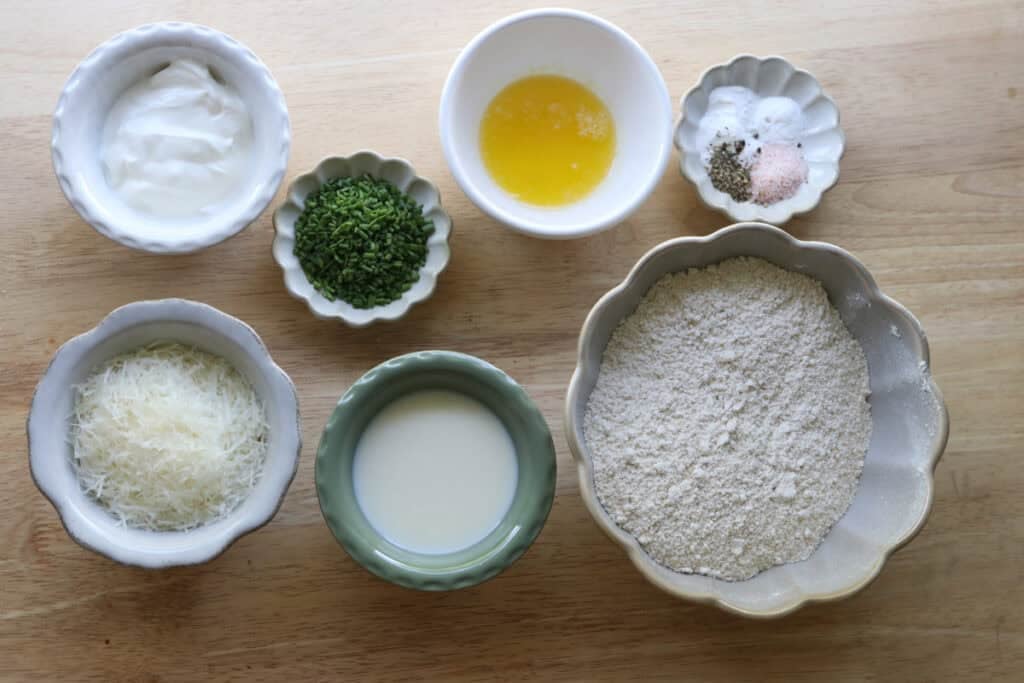
- Preheat the oven to 400 degrees F. and line a baking sheet with parchment paper.
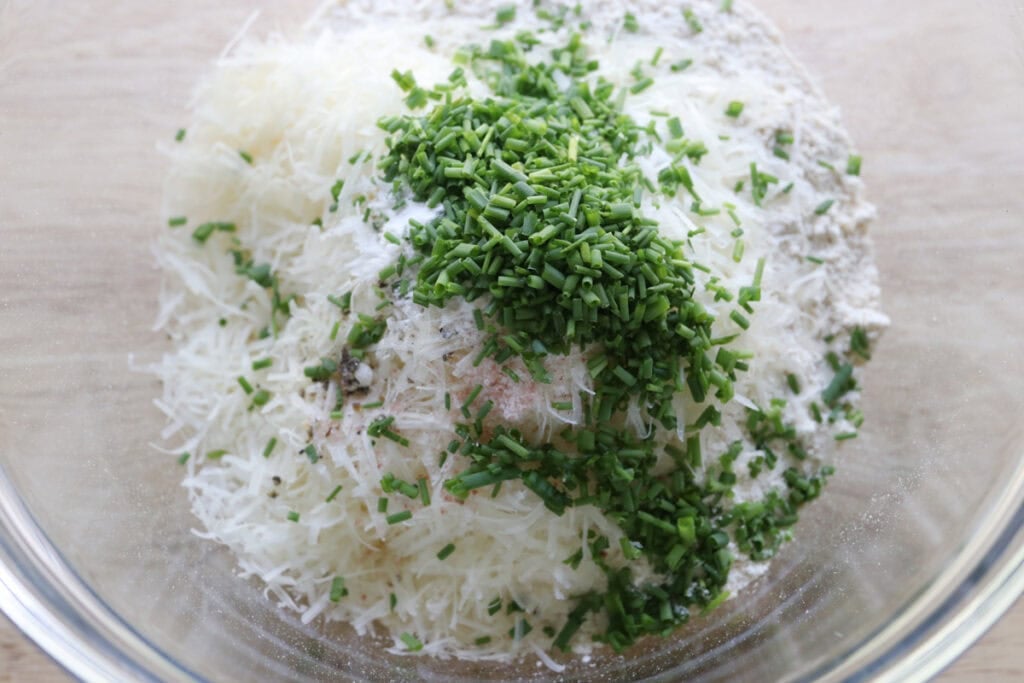
- In a medium bowl, combine the flour, baking powder, salt, pepper, garlic powder, chives, and cheese.
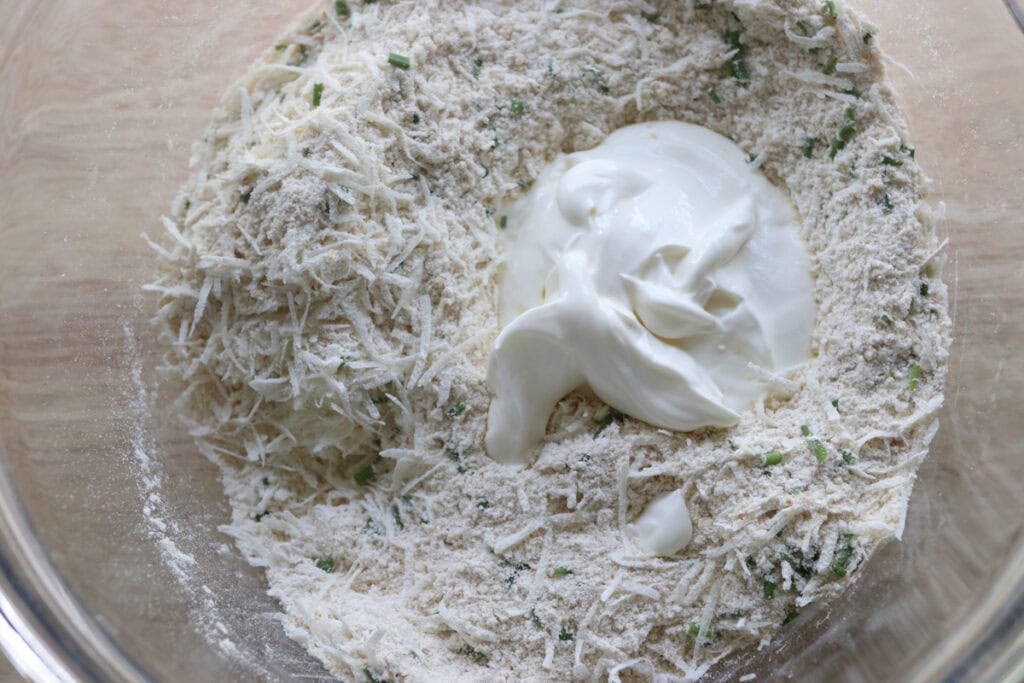
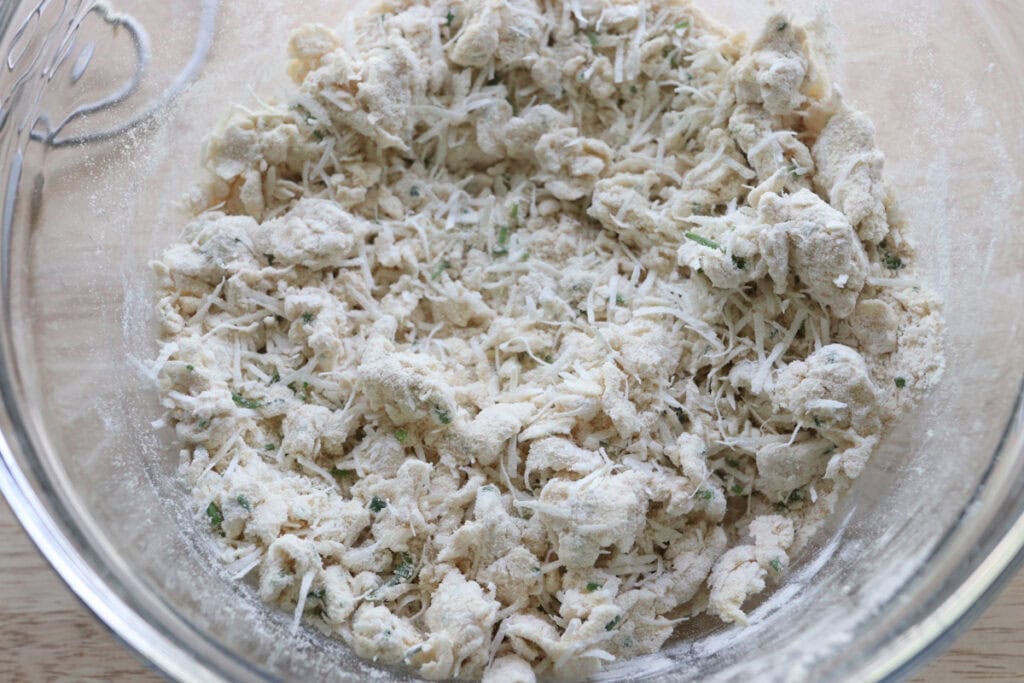
- Add the sour cream to the flour mixture and mix together until coarse crumbs start to form.
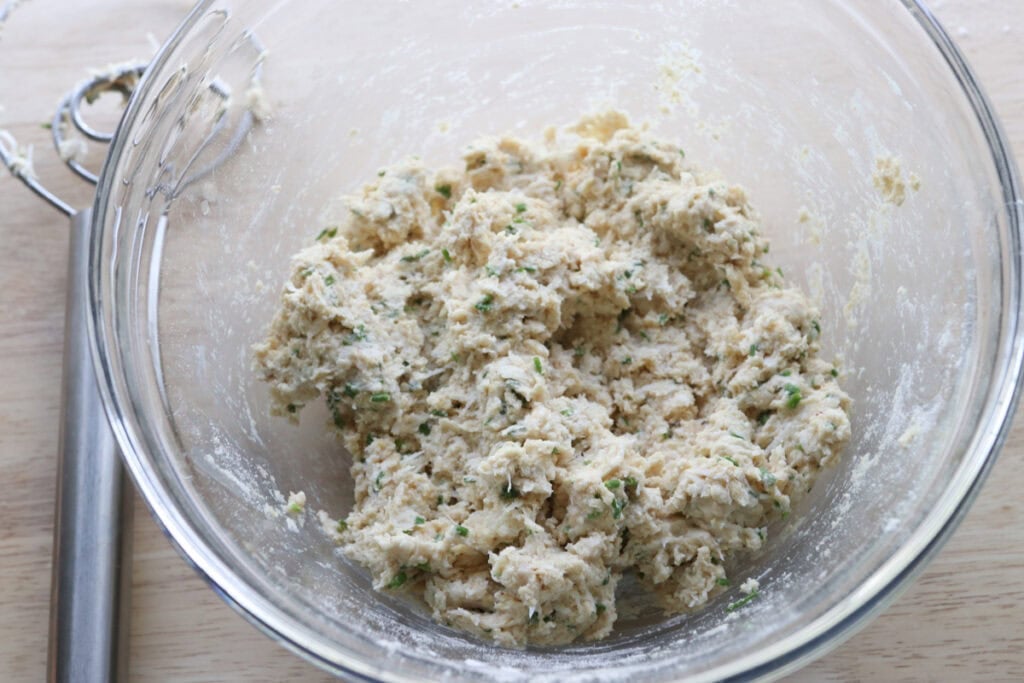
- Add the milk and mix until a thick dough comes together.
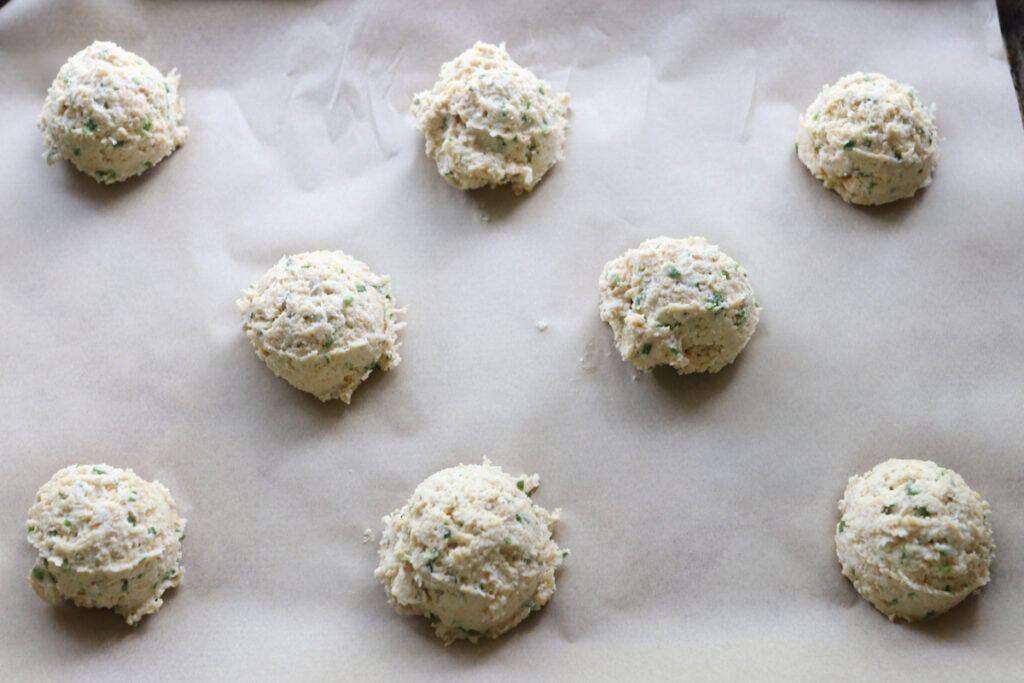
- Use a cookie scoop and scoop the biscuit dough onto the pan.
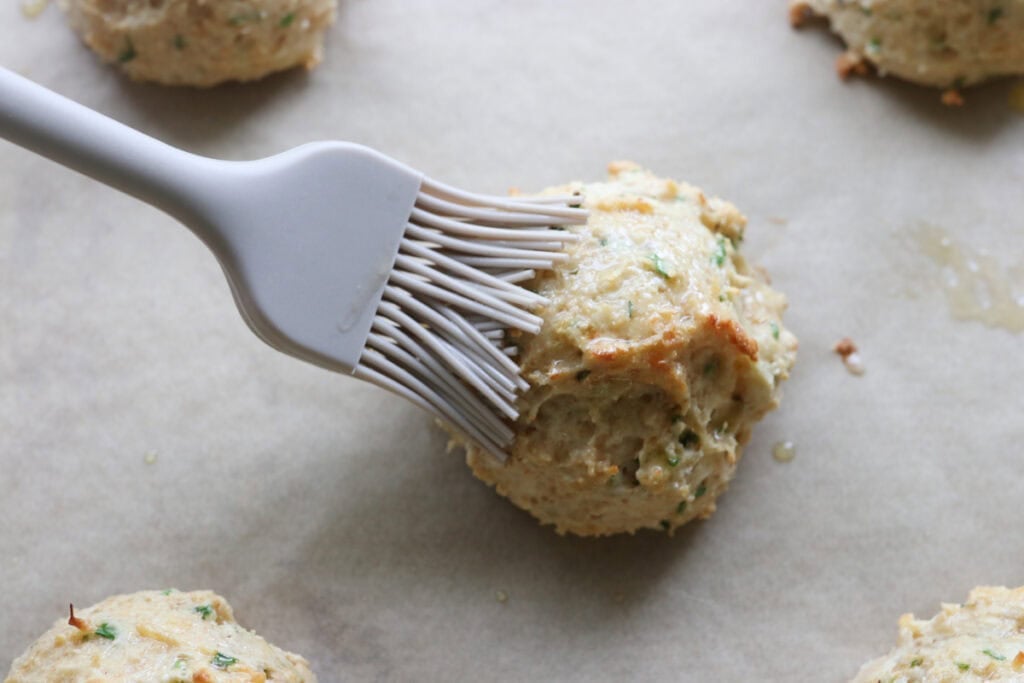
- Bake for 12 minutes, remove from the oven, and brush with the melted butter.
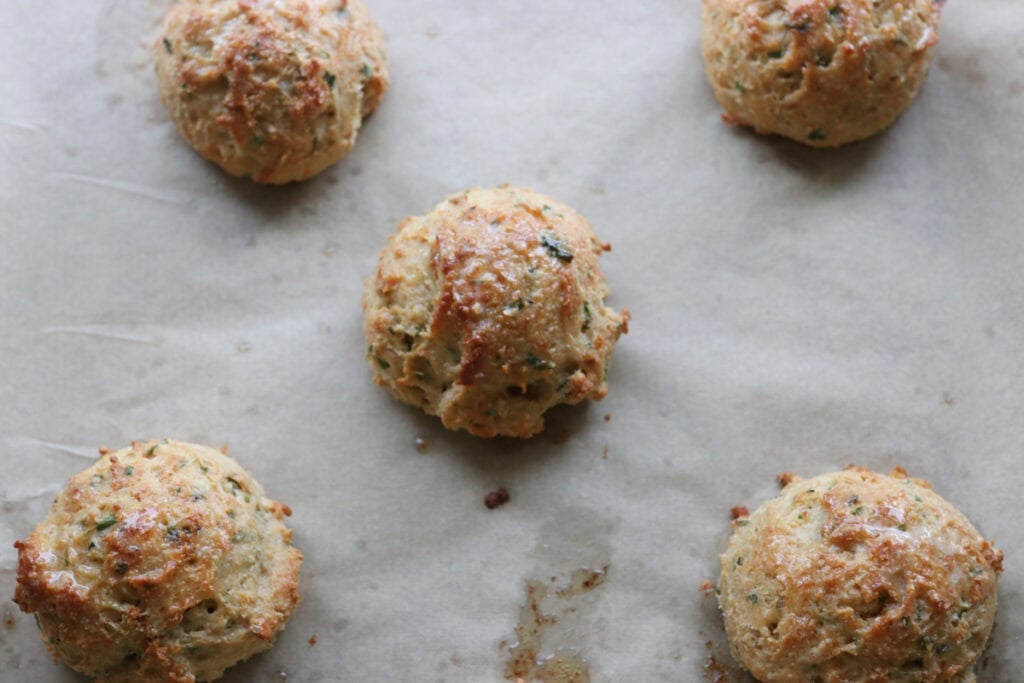
- Bake for another 6-8 minutes, until the bottoms start to turn golden brown.
Troubleshooting Common Problems
Biscuits came out dense and heavy: This usually means the dough was overmixed or the leavening agent wasn’t fresh. Whole grain flour has more structure than white flour, so it’s easier to overwork. Stir just until the dry ingredients disappear, then stop. Also check the expiration date on your baking powder. If it’s old or has been sitting open in a humid kitchen, it loses potency and your biscuits won’t rise.
Biscuits spread too much and turned flat: The sour cream or milk was too warm, or the oven temperature was too low. Make sure everything is cold, and double-check your oven temp with a thermometer. If your kitchen is hot, chill the dough for ten minutes before baking.
Biscuits are dry and crumbly: You either didn’t add enough liquid or you overbaked them. Freshly milled flour can absorb liquid differently depending on the grain and how finely it’s milled, so start with the amount the recipe calls for and add a tablespoon more milk if the dough looks too dry. Also pull them out of the oven as soon as the tops are golden. They’ll keep cooking slightly as they cool.
Tops are pale and won’t brown: Your oven might be running cool, or the biscuits are placed too low in the oven. Move the rack to the upper third and increase the temperature by 25 degrees if needed.
Cheese didn’t melt or distribute evenly: You used pre-shredded Parmesan, which is coated in anti-caking agents that prevent it from melting properly. Always grate your own from a block. Also make sure the cheese is mixed in evenly before you add the liquid. If it clumps in one spot, you’ll get pockets of cheese instead of flavor throughout.
Biscuits stuck to the pan: You skipped the parchment paper or didn’t grease the pan well enough. Biscuit dough can stick, especially if there’s cheese involved. Line your baking sheet with parchment or a silicone mat every time, or grease it generously with butter or oil.
Recipe Variations
If you want to lean into herbs, swap the chives for fresh dill, parsley, or thyme, or use a combination of all three for something more complex. Rosemary works too, but chop it extremely fine because whole needles can be unpleasant to bite into.
For a spicy kick, add a pinch of cayenne or a few tablespoons of finely diced jalapeño.
If Parmesan isn’t your thing, try sharp cheddar for a more classic American biscuit vibe, or Gruyère for something nutty and sophisticated. Pecorino Romano brings more salt and funk, which works beautifully if you love bold flavors. You can also go half Parmesan and half another cheese to split the difference.
For a sweeter take, drop the cheese and chives entirely and add two tablespoons of honey and a handful of dried cranberries or chopped dates. You’ll want to reduce the salt slightly and maybe add a touch of cinnamon. The biscuits won’t be savory anymore, but they’ll still showcase the fresh flour in a completely different way.
If you’re working with a different grain, spelt makes biscuits that are slightly sweeter and more delicate, while einkorn gives you a rich, almost buttery flavor with a tighter crumb. Each grain brings its own personality, and experimenting is half the fun of milling your own flour. You will need to adjust the amount of flour used.
Storing & Leftovers
These biscuits are best eaten warm from the oven, but real life means you’ll probably have leftovers. Once they’ve cooled completely, store them in an airtight container or a zip-top bag at room temperature for up to two days. Freshly milled flour contains more natural oils than refined flour, so baked goods made with it can go rancid faster. If you’re not eating them within two days, move them to the fridge where they’ll keep for up to five days, or freeze them for up to three months.
To reheat, wrap biscuits in foil and warm them in a 350-degree oven for about ten minutes until they’re heated through and the edges crisp up again. You can also split them in half and toast them cut-side down in a skillet with a little butter, which gives you crispy edges and a soft center. The microwave works in a pinch, but it makes them gummy and sad, so avoid it if you can.
If you froze them, let them thaw at room temperature for about an hour, then reheat using the oven method. They won’t be quite as good as fresh, but they’ll still be miles better than anything from a can.

Extra FAQs
Can I make these without a grain mill?
Yes, but you’ll lose the main point of the recipe. If you don’t have a mill, buy the freshest whole grain flour you can find from a local miller or a source that mills to order. Check the milling date and use it within a week or two for the best flavor. Store it in the fridge or freezer to slow down oxidation.
What’s the best grain to mill for these biscuits?
Hard white wheat is the most beginner-friendly because it has a mild, slightly sweet flavor that works well in both sweet and savory recipes. Hard red wheat is more robust and assertive, which some people love and others find too strong. Experiment and see what you like.
Do these freeze well?
Yes. You can freeze the baked biscuits for up to three months, or freeze the dough in scooped portions on a baking sheet, then transfer them to a freezer bag once solid. Bake frozen dough directly from the freezer, adding a few extra minutes to the baking time. They won’t be quite as good as fresh, but they’re still better than most bakery biscuits.
Can I use a stand mixer?
You can, but it’s easy to overmix, which makes the biscuits tough. If you do use a mixer, use the paddle attachment on low speed and stop as soon as the dough comes together. Honestly, a wooden spoon and a bowl give you more control and better results.
Why do my biscuits taste different every time I make them?
Freshly milled flour varies slightly depending on the grain, how finely it’s milled, and even the humidity in your kitchen. Whole grain flour is a living ingredient, and that variability is part of what makes it interesting. If you want more consistency, weigh your ingredients instead of measuring by volume, and keep notes on what grains and settings work best for you.
Can I use dried chives instead of fresh?
Technically yes, but dried chives taste dusty and flat compared to fresh. If you absolutely have to, use about one tablespoon of dried chives and add them to the dry ingredients so they have time to rehydrate slightly in the dough. Fresh is always better.
How do I know when the biscuits are done?
The tops should be golden brown and the edges slightly darker. If you tap the top of a biscuit, it should feel firm, not squishy. You can also insert a toothpick into the center of one. If it comes out clean or with just a few crumbs, they’re done. If it comes out wet, give them another few minutes.
Easy Freshly Milled Parmesan Chive Drop Biscuits
Ingredients
- 1 ¼ cups freshly milled soft white wheat flour finely milled (144 grams)
- 1 teaspoon baking powder
- ½ teaspoon salt
- ¼ teaspoon pepper
- ½ teaspoon garlic powder
- 2 ½ tablespoons fresh chopped chives
- ⅔ cup shredded parmesan cheese 30 grams
- ⅓ cup sour cream 80 grams
- ⅓ cup whole milk 82 grams
- 2 tablespoons melted butter
Instructions
- Preheat the oven to 400 degrees F. and line a baking sheet with parchment paper.
- In a medium bowl, combine the flour, baking powder, salt, pepper, garlic powder, chives, and cheese.
- Add the sour cream to the flour mixture and mix together until coarse crumbs start to form.
- Add the milk and mix until a thick dough comes together.
- Use a cookie scoop and scoop the biscuit dough onto the pan.
- Bake for 12 minutes, remove from the oven, and brush with the melted butter.
- Bake for another 6-8 minutes, until the bottoms start to turn golden brown.


Seems unusual to not have lard, butter, or some kind of fat in the biscuit recipe. Is that correct? I’m looking for a drop recipe that doesn’t spread out, yours looks good.
The sour cream and milk are the fats in the recipe
These fresh milled flour Parmesan chive drop biscuits came together so quickly and would make a wonderful addition to just about any meal. Even though I’m personally not a big fan of Parmesan, I made the recipe exactly as written and still couldn’t stop eating them—I immediately ate four! Next time I’ll adjust the cheese to better suit my own taste, but the recipe itself is a winner. I especially love how fast and easy these biscuits are to make, and I know they’ll be on repeat in my kitchen.
So glad to hear this!
I accidentally slid my finger while posting. This is an absolute 5 star recipe!